
Niacinamide has become a modern skincare essential – and for good reason. Often described as one of the most versatile and well‑tolerated actives, it can support almost every skin type by boosting barrier function, reducing inflammation and balancing oil. Here’s how it works, what it can help with and how to use it effectively.
What is niacinamide and how does it work?
Niacinamide, also known as vitamin B3 or nicotinamide, is a water‑soluble vitamin that strengthens the skin’s natural barrier and optimizes its repair processes. In biological terms, it plays a role in producing NAD⁺ (nicotinamide adenine dinucleotide) – a molecule essential for cell energy and regeneration. Topically, niacinamide helps the skin retain moisture, reduce inflammation and normalize sebum production, all of which lead to calmer, smoother and healthier‑looking skin over time.
Unlike acids or retinoids, it doesn’t exfoliate or peel. Its power lies in helping the skin work better from within, improving resilience against dryness, environmental damage and irritation.
Proven benefits of niacinamide
Clinical studies and dermatology reviews highlight that niacinamide can:
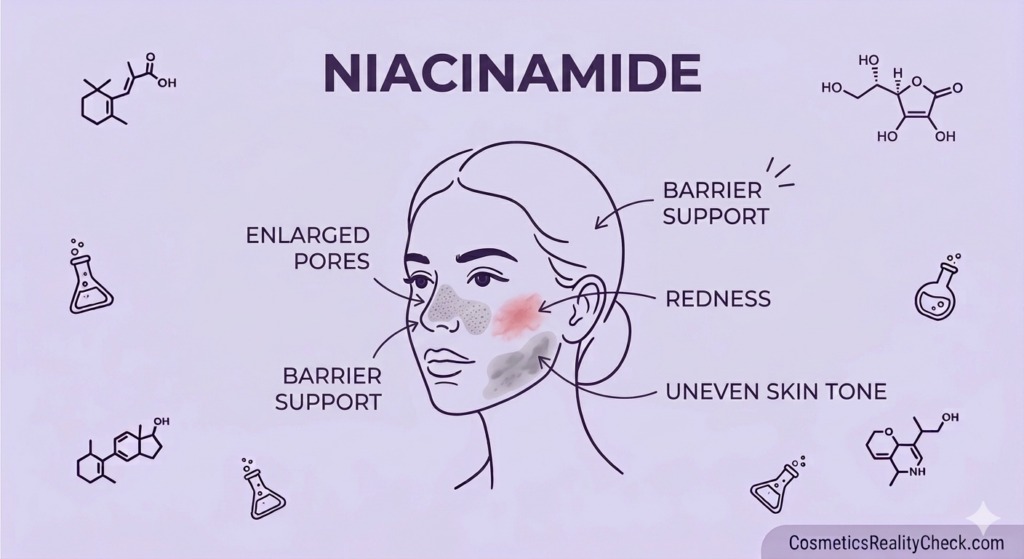
- Strengthen the skin’s barrier by increasing ceramide and fatty acid production.
- Reduce redness, blotchiness and sensitivity by regulating inflammatory processes.
- Minimize enlarged pores and balance oil production in combination or oily skin.
- Fade uneven pigmentation and improve overall skin tone.
- Soften the look of fine lines by improving elasticity and hydration.
Visible benefits are usually noticeable after 4-8 weeks of steady use and improvements often continue with longer‑term application.

Common side effects and why they happen
Although generally well‑tolerated, niacinamide can occasionally cause temporary flushing or mild irritation, especially at concentrations above 10 %. This happens because some formulas convert a small amount of niacinamide into niacin, which increases blood flow to the skin’s surface.
Other possible (but uncommon) effects include:
- Warmth or tingling after application
- Mild redness or sensitivity
- Breakouts if combined with too many other active ingredients
These reactions usually improve when reducing concentration or frequency. If persistent redness or stinging occurs, it’s best to pause and re‑introduce slowly.
Who should be careful or avoid niacinamide?
Niacinamide suits almost every skin type – dry, oily, sensitive or acne‑prone – but moderation helps. Be cautious if:
- You already use multiple actives (like strong acids, retinoids or vitamin C), which may overload the skin barrier.
- Your skin is very reactive and flares easily – start with low strengths (2-5 %) instead of 10 % or higher.
- You combine niacinamide with pure L‑ascorbic acid (vitamin C); though compatible at stable pH levels, layering them rapidly may cause flushing in sensitive skin.
For most users, however, niacinamide remains one of the safest and most versatile ingredients available.
How to introduce niacinamide into your routine
You can use niacinamide both day and night because it doesn’t increase photosensitivity. To get the best from it:
- Start with a low‑ to mid‑strength (2-5 %) serum or moisturizer.
- Apply after cleansing and toning, before heavier creams or sunscreen.
- Use once daily for two weeks, then increase to twice daily if tolerated.
- Combine with moisturizers, ceramides or hyaluronic acid for extra hydration.
- Always keep your routine balanced – niacinamide pairs well with retinol, peptides and antioxidants.
For those already using retinol, niacinamide is an excellent buffer and companion, helping soothe and strengthen the skin while reducing dryness and redness.
Bottom line
Niacinamide is one of skincare’s most dependable multitaskers – calming, strengthening and evening out the skin without harshness or downtime. It works for virtually every skin type and plays well with most routines. If retinol is the demanding overachiever of skincare, niacinamide is the steady multitasker keeping your barrier strong and skin happy year‑round.