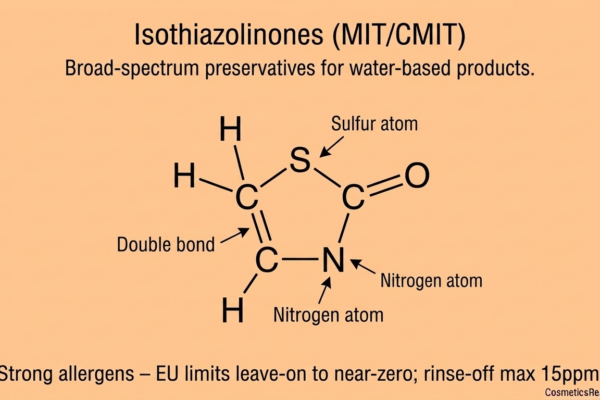
Isothiazolinone Preservatives: Why They’re Now Restricted in Leave‑On Cosmetics

Isothiazolinones (like methylisothiazolinone/MI and methylchloroisothiazolinone/MCI) are potent broad-spectrum preservatives that replaced parabens in many cosmetics. While highly effective at preventing microbial growth, they’ve earned strict regulations due to widespread contact allergies and skin sensitization. Here’s why brands still use them – and the limits you need to know.

Isothiazolinone Preservatives

Dimethicone and Silicones in Hair & Skin: What They Do and Why Brands Use Them

Dimethicone and other silicones are everywhere in beauty products – from silky serums to shine-boosting conditioners. These synthetic polymers create that luxurious “slip”, lock in moisture and improve product performance. But are they helping your skin and hair long-term, or just masking issues? Here’s the science behind why brands love them and what they actually…

Dimethicone & Silicones

Fragrance Allergens in Cosmetics: The 26 EU‑Listed Names and What They Mean

Fragrance allergens are specific aroma compounds that must be declared on cosmetic labels in the EU when they exceed trace levels. Originally 26 compounds identified for their high sensitization potential, this list helps consumers with contact allergies avoid triggers. While the EU expanded labeling requirements in 2023, the original 26 remain the most recognized –…

Fragrance Allergens

Salicylic Acid (BHA): The Pore‑Clearing Acid That Works Inside Out

Salicylic acid is a skincare classic that’s earned its reputation as the go‑to ingredient for unclogging pores and keeping breakouts under control. As the best‑known beta‑hydroxy acid (BHA), it’s oil‑soluble, meaning it can actually penetrate into the pores – making it especially effective for oily and acne‑prone skin types. Let’s break down how it works,…

Salicylic Acid