Dry skin isn’t just about adding moisture – it’s about repairing the barrier, preventing water loss and choosing ingredients that actually strengthen skin from within.Understanding dry skinDry skin occurs when the skin barrier is compromised, leading to transepidermal water loss (TEWL), flaking, tightness, sensitivity, and rough texture.
Causes include aging (ceramide levels drop), harsh cleansers, environmental stress, over-exfoliation, and genetic conditions like eczema.
1. Ceramides: The barrier rebuilders
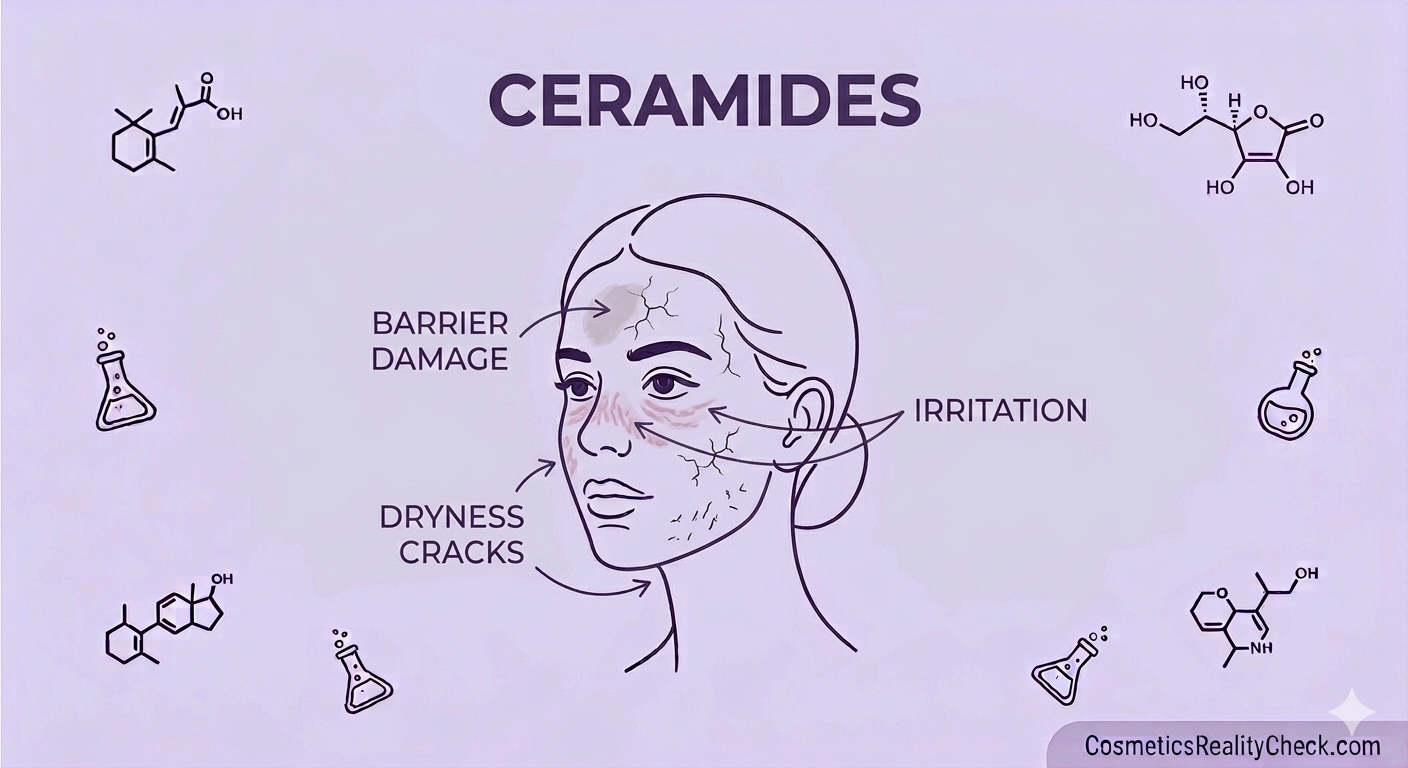
Ceramides make up 50% of the skin’s protective barrier and act like mortar between skin-cell bricks. When ceramide levels drop, moisture escapes and irritants get in.
Topical ceramides in a 3:1:1 ratio (ceramides:cholesterol:fatty acids) restore barrier function within 7 days and reduce TEWL by up to 21%. Look for ceramide NP, AP, EOP near the top of ingredient lists.
2. Hyaluronic acid: The moisture magnet
Hyaluronic acid holds up to 1,000 times its weight in water, pulling moisture from the environment and deeper skin layers to the surface.
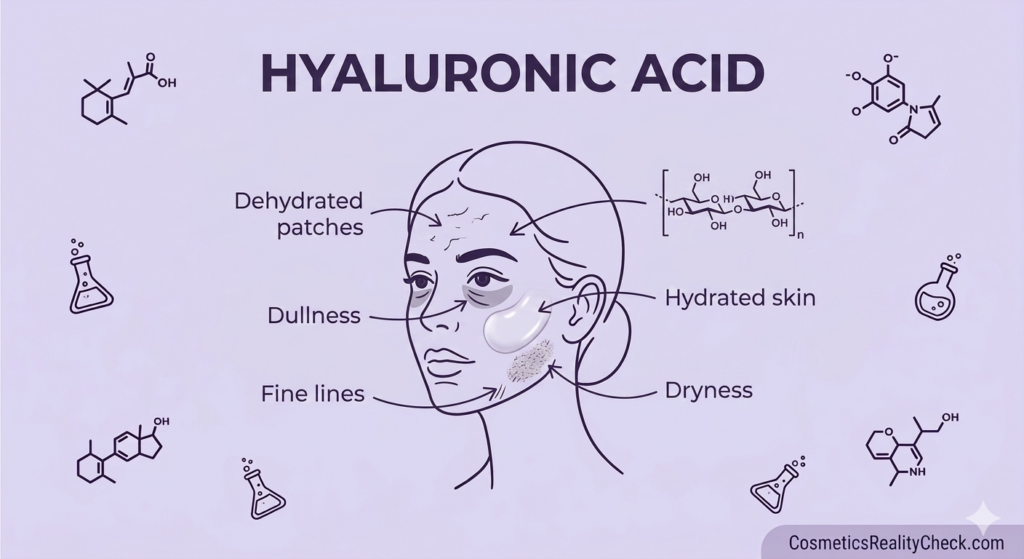
Apply to damp skin and seal with an occlusive moisturizer to lock it in. Studies show HA increases hydration by 96% after 8 weeks of consistent use.
3. Glycerin: The classic humectant
Glycerin is a simple, effective humectant that attracts water to the skin and supports barrier lipid production. It’s gentle, non-comedogenic, and suitable for all skin types, making it a staple in moisturizers for dry skin.
4. Niacinamide: Barrier strengthener
Niacinamide at 2–5% boosts ceramide production, strengthens the barrier, and reduces TEWL.
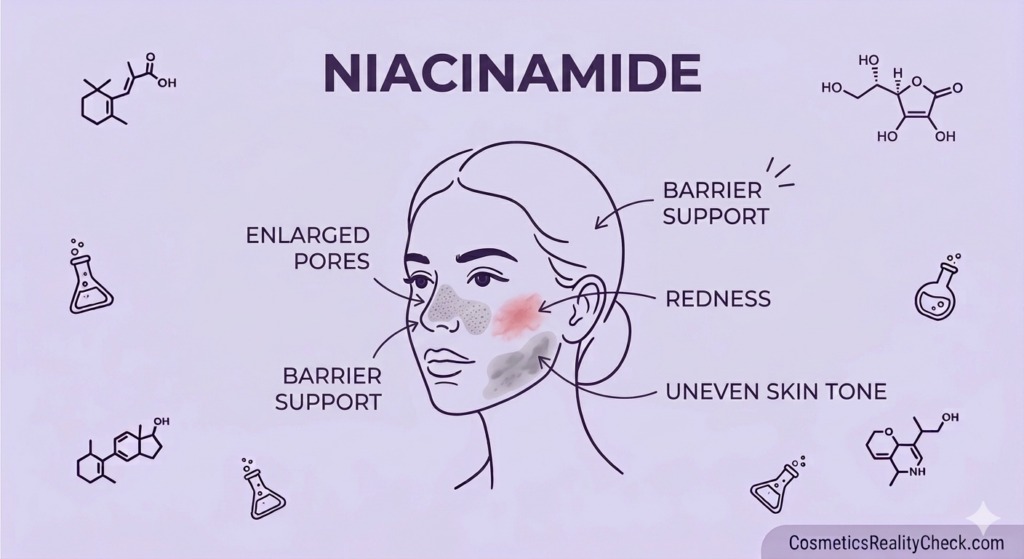
It also improves elasticity and texture, making it valuable for dry, aging skin.
5. Panthenol (Provitamin B5): Hydration and healing
Panthenol is both a humectant and emollient that hydrates, soothes irritation, and supports barrier repair.
It’s extremely gentle and often used in products for eczema-prone and post-procedure skin.
6. Urea: Exfoliating moisturizer
Urea at 5–10% is a unique ingredient that exfoliates dead skin cells while simultaneously hydrating and softening.
It’s gentler than glycolic or salicylic acid and ideal for very dry, flaky skin.
7. Cholesterol and fatty acids: Lipid support
When combined with ceramides in the correct ratio, cholesterol and free fatty acids (like linoleic and oleic acid) restore the lipid barrier faster and more effectively than ceramides alone.
8. Occlusives: The moisture sealers
Occlusives like petrolatum, dimethicone, squalane, and shea butter create a protective layer that prevents water evaporation.
Apply as the last step in your routine, especially at night, to seal in all previous layers.
Sample dry skin routine
Morning:
- Gentle, creamy cleanser (no sulfates)
- Hyaluronic acid serum on damp skin
- Niacinamide serum
- Ceramide-rich moisturizerSunscreen SPF 30+
Evening:
- Oil-based or balm cleanser
- Hyaluronic acid serum on damp skin
- Ceramide + cholesterol + fatty acid cream
- Occlusive (petrolatum or squalane) on extra-dry areas
Bottom line
The most effective dry skin treatment combines humectants (hyaluronic acid, glycerin) to pull water in, barrier-repairing lipids (ceramides, cholesterol, fatty acids) to stop water loss and occlusives (petrolatum, squalane) to seal everything in.
Results improve within 2–4 weeks of consistent use.