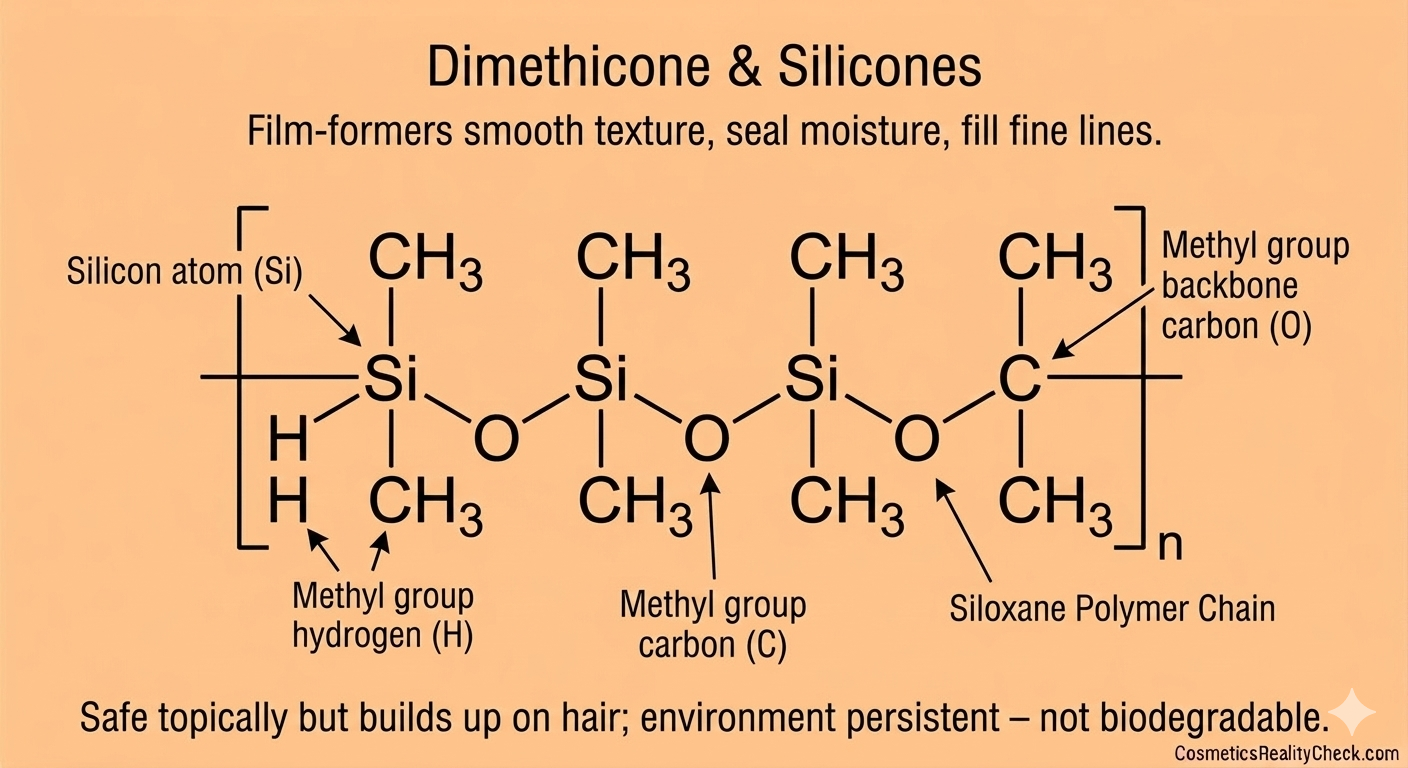
Dimethicone and other silicones are everywhere in beauty products – from silky serums to shine-boosting conditioners. These synthetic polymers create that luxurious “slip”, lock in moisture and improve product performance. But are they helping your skin and hair long-term, or just masking issues? Here’s the science behind why brands love them and what they actually deliver.
What are dimethicone and silicones and how do they work?
Dimethicone is the most common silicone – a lightweight, silicone-based polymer that coats the skin or hair with a thin, flexible, breathable film. This occlusive barrier reduces water loss while smoothing surfaces by filling microscopic gaps between skin cells or along hair cuticles. Other silicones like cyclomethicone (volatile, fast-drying) or amodimethicone (conditioning for hair) serve similar roles but evaporate or bond differently.
Brands use them because they transform product texture – making thick creams spread like water, giving shampoos instant slip and ensuring makeup glides flawlessly. The result feels premium without greasiness.
Proven benefits for skin and hair
- Moisture barrier: Seals hydration into skin and cuticles, preventing dryness and frizz.
- Smooths texture: Temporarily fills fine lines, pores and rough patches for instant softness.
- Product performance: Improves spreadability, stability and silky feel – key for consumer appeal.
- Hair protection: Coats strands to reduce friction, boost shine and shield from heat tools.
- Sensitive skin safe: Non-comedogenic, hypoallergenic and non-irritating for most users.
Common side effects and why they happen
Silicones rarely cause reactions but can build up over time, especially on hair – leading to dullness or weighing down fine strands. On skin, heavy silicones may trap debris if not cleansed properly.
- Hair buildup from non-water-soluble silicones like dimethicone (use clarifying shampoo weekly).
- Potential pore congestion in rare cases despite non-comedogenic claims.
- “Silicone allergy” (actually contact dermatitis to impurities or vehicle ingredients).
Who should be careful or avoid silicones?
- Fine or damaged hair: Volatile silicones (cyclopentasiloxane) are better; avoid heavy coatings.
- Acne-prone skin: Lightweight, water-soluble versions or silicone-free if buildup concerns you.
- Curly/coily hair: Can interfere with moisture absorption – clarify regularly.
Most people tolerate silicones well; issues arise from overuse or poor cleansing rather than the ingredients themselves.
How to use products with silicones effectively
- Choose volatile silicones (ending in -cone) for lightweight feel that evaporates.
- Layer lightly – silicones work best as the final step to seal other actives.
- Cleanse properly: Use a double-cleanse or clarifying shampoo weekly to prevent buildup.
- Pair with humectants (hyaluronic acid, glycerin) so the barrier traps real moisture.
- For hair, alternate silicone-heavy stylers with clean formulas.
Bottom line
Dimethicone and silicones excel at immediate smoothness, moisture retention and luxurious texture – explaining their ubiquity in formulas. They’re safe, non-comedogenic and effective for most, but work best with proper cleansing to avoid buildup. If you love the silky feel and instant results, keep using them; for “clean beauty” preferences, plenty of alternatives deliver similar benefits without synthetic polymers.