If you’re looking for skincare that helps your skin look firmer, smoother and more resilient, peptides deserve your attention. These tiny chains of amino acids act as messengers that tell your skin to perform specific functions – like producing more collagen and elastin. While they sound scientific, peptides are actually one of the gentlest and most effective approaches to visible anti‑aging. Here’s how they work and what makes them worth the hype.
What are peptides and how do they work?
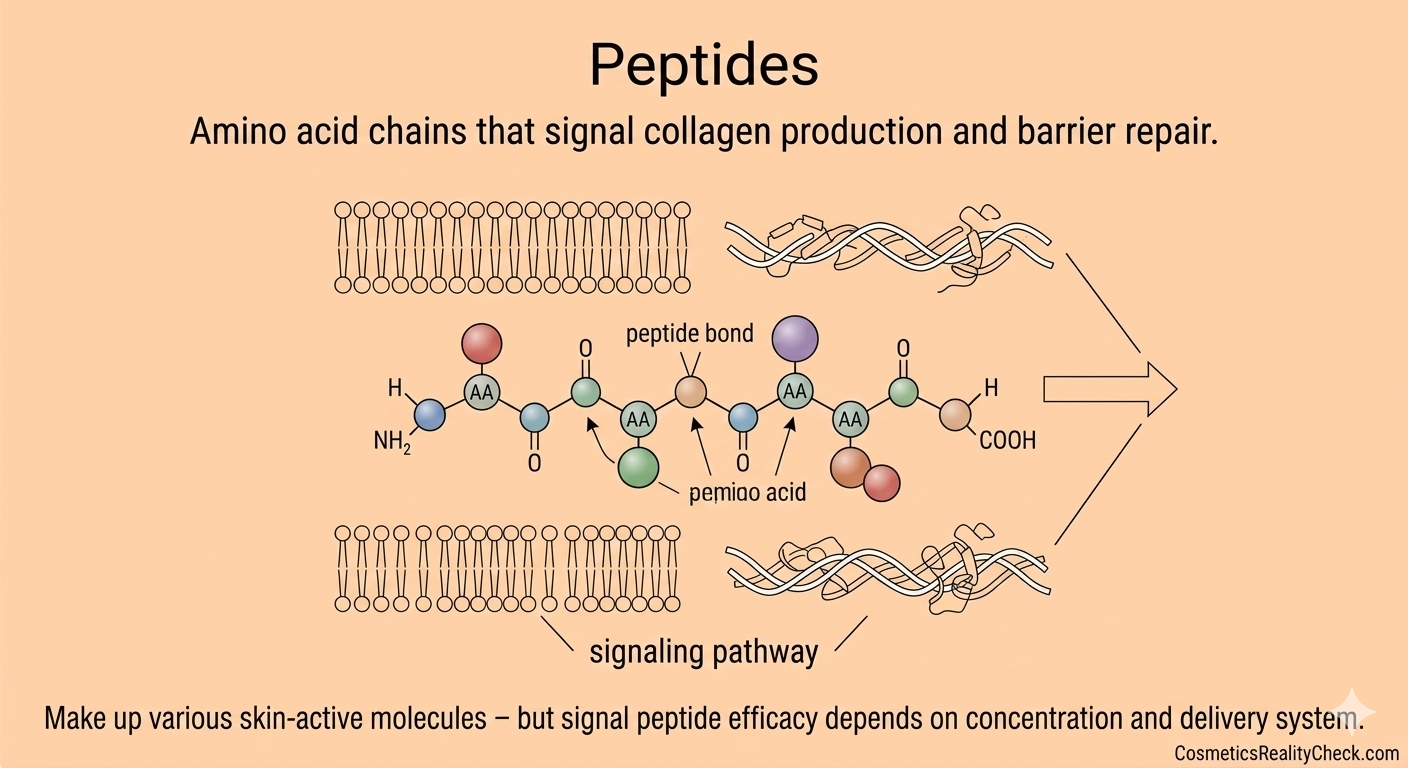
Peptides are short chains of amino acids, the building blocks of proteins such as collagen, elastin and keratin. These proteins give skin its structure, firmness and elasticity. As skin ages, natural collagen and elastin production slows, leading to wrinkles, sagging and a thinner appearance.
When applied topically, certain peptides can signal skin cells to ramp up collagen or elastin synthesis. Others serve as carrier peptides, delivering trace minerals that stimulate repair processes. The result? Gradual restoration of firmness, smoother texture and a stronger skin barrier without irritation.
Proven benefits of peptides
- Boosts collagen and elastin: Encourages skin’s structural proteins for improved firmness and elasticity.
- Reduces the look of fine lines: Helps soften expression lines over consistent use.
- Improves barrier function: Strengthens the skin’s protective layer to minimize moisture loss.
- Enhances repair and recovery: Ideal for post‑retinol or post‑exfoliation skin soothing.
- Supports youthful texture and tone: Promotes smoother, plumper‑looking skin over time.
Peptides work best as part of a long‑term routine, with visible results typically emerging over 6-12 weeks of continued use.
Common side effects and why they happen
Peptides are generally very well‑tolerated and suitable for almost all skin types. Because they don’t exfoliate or increase cell turnover, irritation is rare. However, mild reactions may occur depending on the surrounding formula.
- Minor greasiness from rich peptide creams
- Breakouts if paired with heavy occlusive ingredients
- Slight stinging if used on broken or irritated skin
These can usually be avoided by choosing formulations tailored to your skin type – light serums for oily skin and richer creams for dry or mature complexions.
Who should be careful or avoid peptides?
- Peptides are safe for nearly everyone, including sensitive skin types.
- People using prescription retinoids or exfoliating acids can safely combine peptides – they often help reduce irritation.
- Pregnant or breastfeeding users can use peptides confidently, as they are non‑hormonal and act only at the skin’s surface.
How to use peptides effectively
- Apply a peptide serum or moisturizer on clean skin after lightweight hydrators like hyaluronic acid.
- Use twice daily for cumulative results – morning and evening.
- Layer easily with vitamin C, niacinamide or ceramides.
- For maximum effect, be consistent – peptides act gradually, not overnight.
- Follow with broad‑spectrum sunscreen in the morning to protect the new collagen you’ve worked hard to build.
Bottom line
Peptides are like gentle coaches for your skin cells – encouraging them to perform at their best without causing stress or irritation. Whether your goal is firmer skin, fewer fine lines or stronger barrier health, incorporating peptides into your daily routine can deliver long‑term, visible improvements that keep your complexion looking youthful and resilient.