Retinol is one of the most researched anti‑ageing and anti‑acne ingredients in skincare – but it’s also one of the easiest to misuse. This guide explains what it does, what side effects to expect and how to build it into a routine without wrecking your barrier.
What is retinol and how does it work?
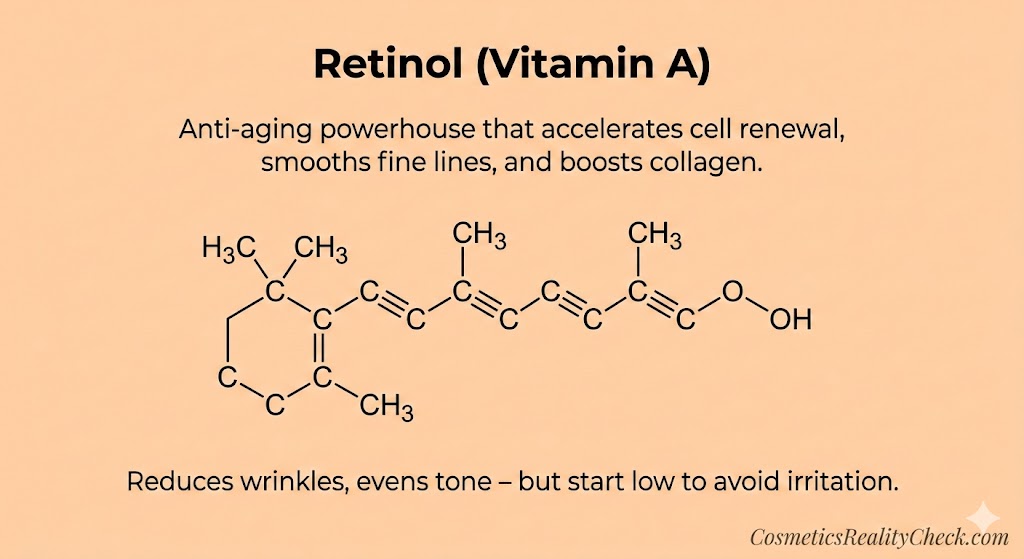
Retinol is a vitamin A derivative (a type of retinoid) used in over‑the‑counter skincare to speed up cell turnover and boost collagen production in the skin. In simple terms, it helps older, damaged cells shed faster and encourages the skin to make fresher, more organized collagen and elastin over time. Because of this, regular use of properly formulated retinol can soften fine lines, improve texture and help fade some forms of hyperpigmentation, especially sun damage and post‑acne marks. It is weaker than prescription‑only retinoids (like tretinoin), but also tends to be less irritating and more suitable for long‑term cosmetic use.
Proven benefits of retinol
Studies and dermatology reviews consistently show that topical retinoids, including cosmetic‑strength retinol, can:
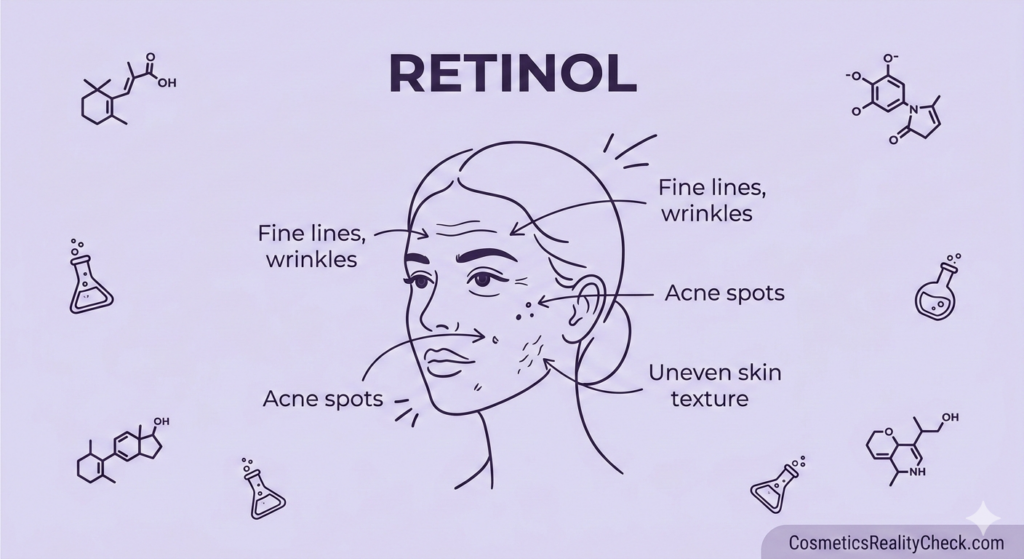
- Reduce the appearance of fine lines and some wrinkles over months of consistent use.
- Improve rough texture and visible pores by normalizing cell shedding.
- Help treat mild to moderate acne by keeping pores clearer and reducing comedones.
Improvements are gradual: over‑the‑counter products usually take several weeks to months before visible changes appear, especially for wrinkles and pigmentation. Stronger prescription retinoids work faster but also carry a higher risk of side effects.
Common side effects and why they happen
Retinol speeds up cell turnover and can temporarily weaken the outer barrier layer if introduced too fast. As a result, first‑time users often experience:
- Dryness and tightness
- Redness and burning sensations
- Flaking or peeling skin
- Itching or general sensitivity
- Increased sensitivity to sunlight
These effects – sometimes called “retinoid dermatitis” – are usually worst in the first weeks and often calm down as the skin adapts, especially if you reduce frequency or concentration. In some people, retinol also seems to trigger temporary breakouts or “purging” as clogged material comes to the surface faster.
More severe reactions like significant swelling, crusting, blistering or intense burning are not normal for cosmetic‑strength retinol and should be a signal to stop and speak to a professional.
Who should be careful or avoid retinol?
Retinol isn’t for everyone. Caution or avoidance is generally advised if:
- You are pregnant or breastfeeding-retinoids are usually not recommended in these situations; talk to your doctor instead of self‑prescribing.
- You have very sensitive, reactive or barrier‑compromised skin (e.g. active eczema or rosacea) and already struggle with stinging from basic products.
- You cannot consistently use sunscreen-retinoids can make your skin more sun‑sensitive and UV exposure also deactivates retinol.
In these cases, gentler options such as niacinamide, bakuchiol or certain peptides may be more appropriate starting points, ideally chosen with a dermatologist’s help.
How to introduce retinol with fewer problems
To lower the risk of irritation, most dermatology sources recommend a “start low and go slow” approach rather than jumping into high strengths every night. Practical steps include:
- Start with a low concentration (for example 0.1–0.3% retinol) rather than maximum‑strength formulas.
- Apply a pea‑sized amount for the whole face, not a thick layer.
- Use 1-2 nights per week at first, then slowly build up to every other night or nightly only if your skin tolerates it.
- Apply on dry skin after cleansing and follow with a moisturizer to buffer irritation.
- Use broad‑spectrum sunscreen every day, as retinol increases photosensitivity and UV also degrades the molecule.
If significant redness, burning or peeling persists for more than a few weeks despite spacing applications out, it’s a sign to stop or change product rather than pushing through.
Bottom line
Retinol is a powerful, well‑studied ingredient for photoaging and acne, but it’s also an irritant when misused. Used in a sensible routine-low strength, infrequent at first, combined with moisturizer and daily sunscreen-it can be both safe and effective for many people. Those with very sensitive skin, pregnant or breastfeeding people or anyone with serious side effects should talk to a professional before continuing or starting retinoid use.