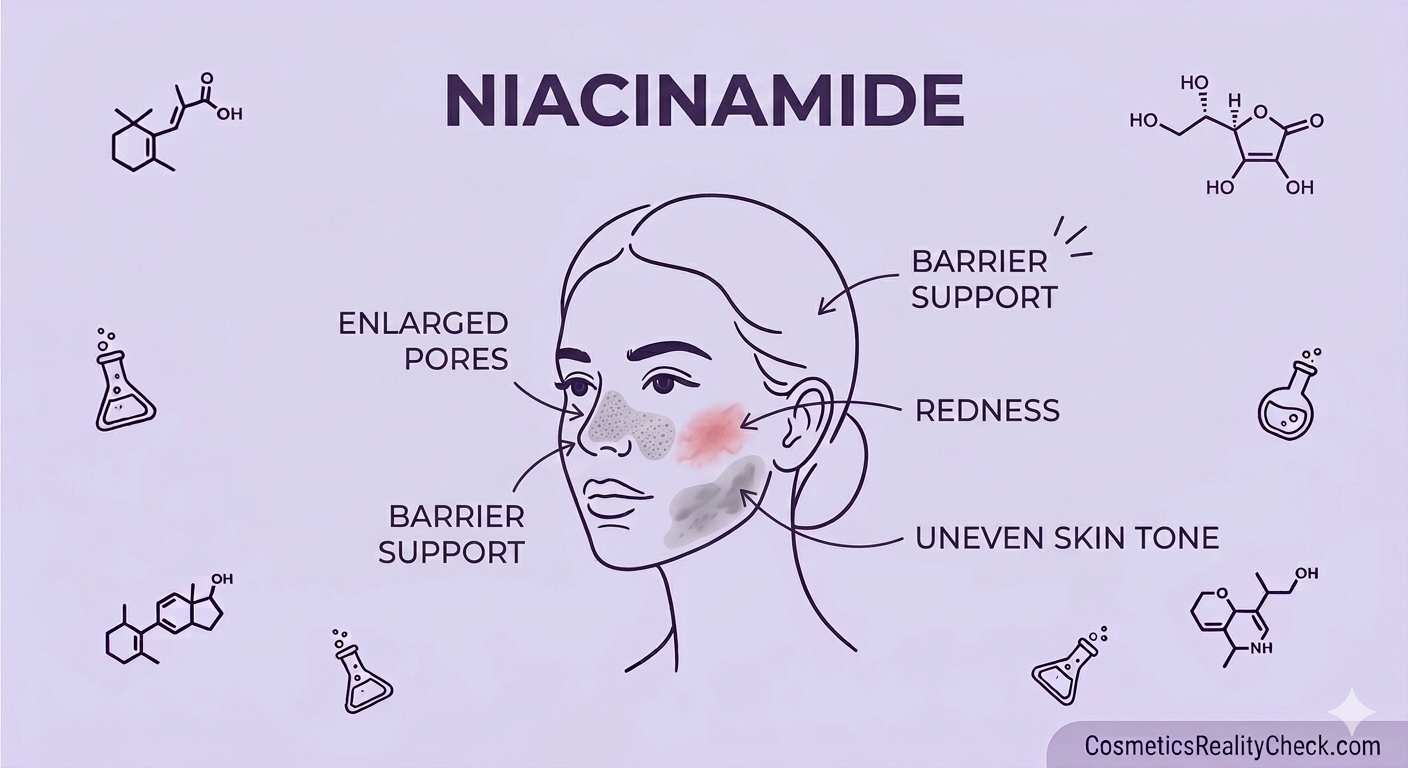
Oily skin needs balance, not stripping. These ingredients regulate sebum, mattify shine and prevent breakouts without triggering rebound oil production.
Understanding oily skin
Oily skin results from overactive sebaceous glands producing excess sebum, leading to shine, enlarged pores and acne.
Triggers include hormones, stress, humidity, harsh products and genetics.
The goal: balanced sebum production, not complete elimination (sebum is protective).
1. Niacinamide: The oil regulator
Niacinamide at 4–10% is the most versatile ingredient for oily skin, clinically proven to reduce sebum production by up to 30% over 8–12 weeks.
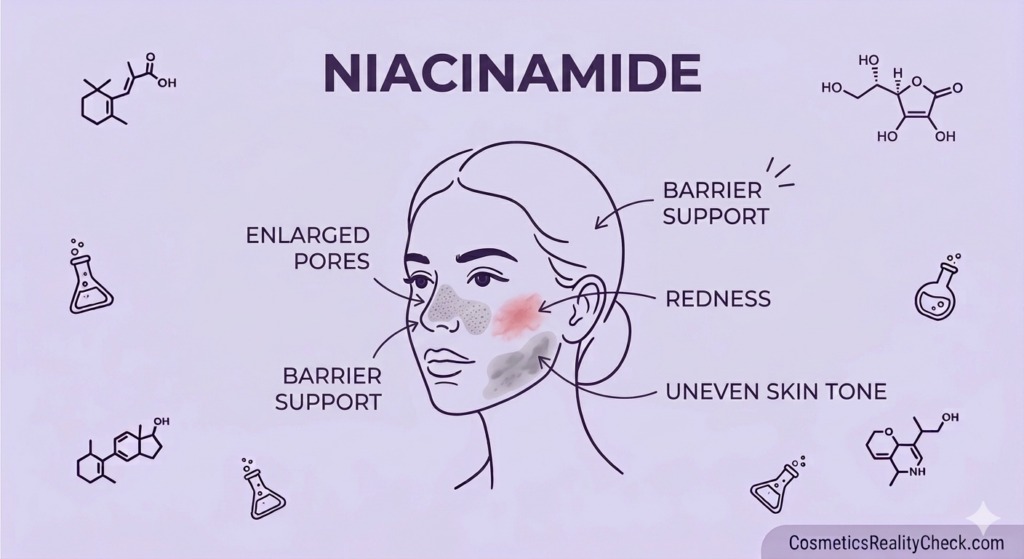
It also refines pores, calms inflammation and strengthens the barrier without irritation.
Unlike harsh actives, niacinamide is well-tolerated by sensitive skin and can be used morning and night.
2. Salicylic acid (BHA): The pore cleanser
Salicylic acid at 0.5–2% is oil-soluble, meaning it penetrates sebum-filled pores to exfoliate from the inside, clearing blackheads, whiteheads and preventing breakouts.
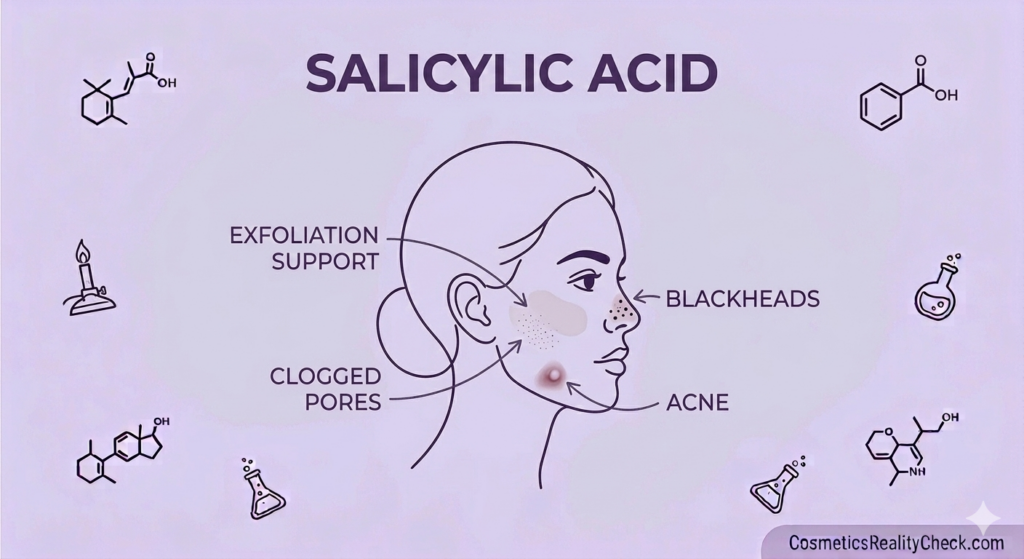
Use 1–2 times daily in cleansers, toners or serums.
3. Zinc PCA: Sebum balancer
Zinc PCA combines zinc’s seboregulating and antibacterial properties with pyrrolidone carboxylic acid (PCA) for moisturization.
It reduces oiliness, soothes irritation and performs well in lightweight gels and serums.
4. Clay (Kaolin, Bentonite): Oil absorbers
Clays act like blotting papers, absorbing excess sebum from the skin’s surface without stripping.
Use in weekly masks (kaolin for sensitive skin, bentonite for very oily skin) to detoxify and mattify.
5. Silica: Mattifying powder
Silica creates an invisible matte finish by absorbing surface oil and giving skin a smooth, velvety texture.
It’s often found in primers and mattifying moisturizers to control shine throughout the day.
6. Humectants (Glycerin, Hyaluronic Acid): Lightweight hydration
Even oily skin needs hydration. When skin is dehydrated, it can overproduce oil to compensate.
Lightweight humectants like glycerin and sodium hyaluronate (hyaluronic acid) provide water-based moisture without heaviness or clogging pores.
7. Retinoids: Cell turnover and pore control
Retinoids (retinol, adapalene) normalize cell turnover, prevent pores from clogging and regulate sebum production over time.
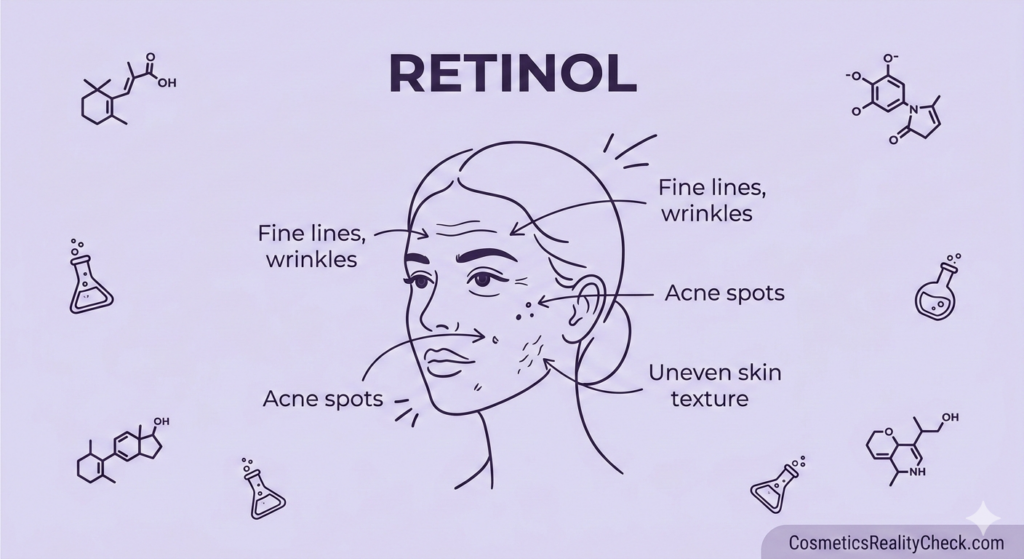
They’re especially effective for oily skin with acne and enlarged pores.
What to avoid with oily skin
- Heavy oils and butters (coconut oil, cocoa butter)
- Thick, occlusive creams (switch to gels or lightweight lotions)
- Over-cleansing or harsh surfactants (triggers more oil)
- Alcohol-heavy toners (temporarily mattifying but drying, causes rebound oil)
Sample oily skin routine
Morning:
- Gentle foaming or gel cleanser
- Salicylic acid toner (2%)
- Niacinamide serum (4–10%)
- Lightweight, oil-free moisturizer with silica or zinc PCA
- Mattifying sunscreen SPF 30+
Evening:
- Oil-based cleanser (to remove sunscreen/makeup)
- Gel cleanser
- Salicylic acid or retinoid treatment
- Niacinamide serum
- Lightweight gel moisturizer
Weekly:
Clay mask (kaolin or bentonite) 1–2 times per week
Bottom line
The most effective oily skin routine combines sebum regulation (niacinamide, zinc PCA), pore-clearing exfoliation (salicylic acid, retinoids), oil absorption (clay, silica) and lightweight hydration (glycerin, hyaluronic acid) without stripping the barrier.
Results improve within 4–8 weeks.