Glycolic acid has long been a star of exfoliating skincare – and for good reason. As one of the most effective alpha‑hydroxy acids (AHAs), it works to dissolve dead skin cells, smooth uneven texture and stimulate collagen renewal. If your skin feels dull, congested or rough, glycolic acid can help reveal a brighter, more even complexion. Here’s how it works and how to use it without overdoing it.
What is glycolic acid and how does it work?
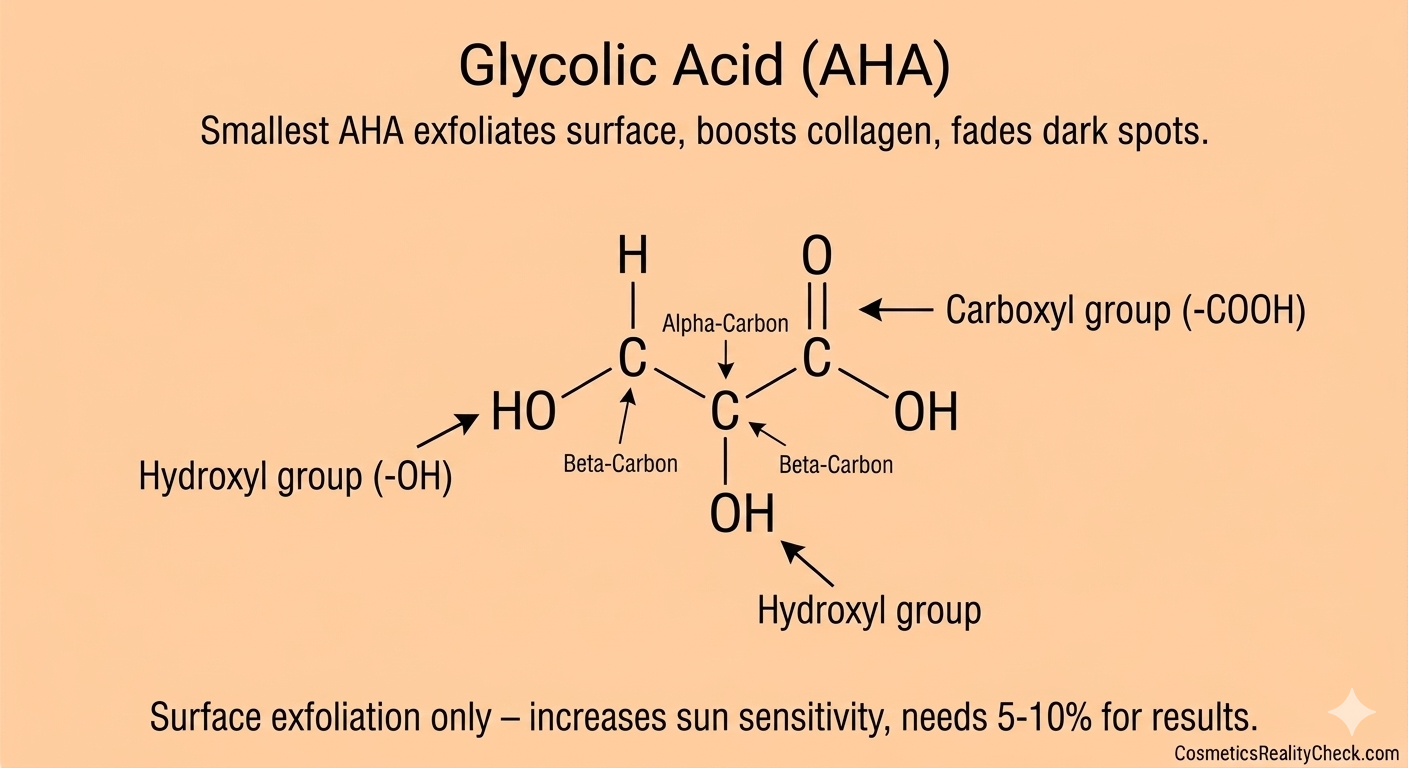
Glycolic acid is a type of alpha‑hydroxy acid derived from sugarcane. It has the smallest molecular size of all AHAs, which allows it to penetrate deeply into the skin’s outermost layers. There, it breaks down the bonds that hold dull, dead cells together – effectively encouraging them to shed and making room for newer, fresher skin beneath.
Beyond exfoliation, glycolic acid also helps stimulate collagen production and improve water retention, making it a versatile ingredient for improving tone, radiance and early signs of aging.
Proven benefits of glycolic acid
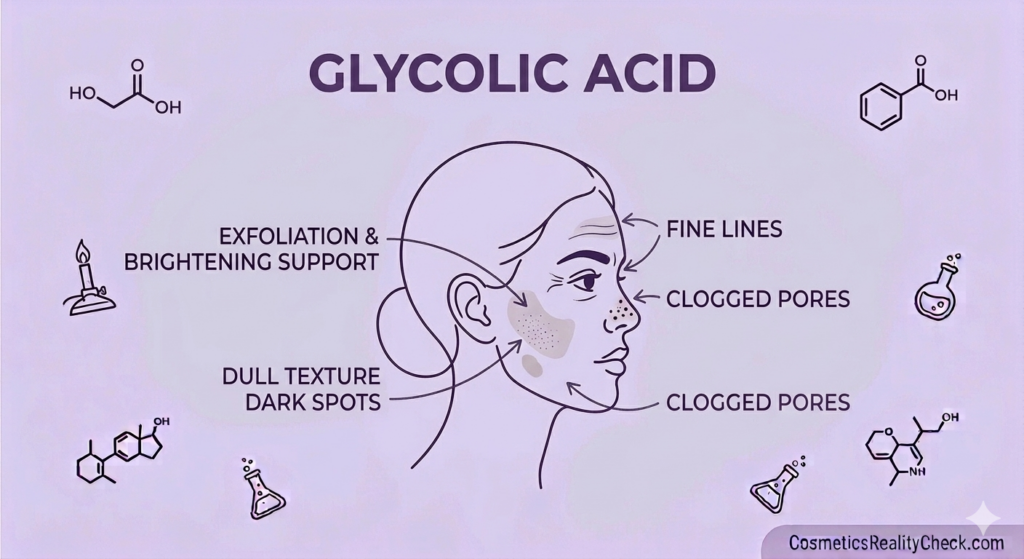
- Brightens dull skin: Removes surface buildup for a renewed, glowing appearance.
- Smooths rough texture: Refines uneven skin and softens fine lines over time.
- Improves absorption: Helps other products, like serums and moisturizers, penetrate better.
- Fades dark spots: Encourages more even pigment distribution and smoother tone.
- Boosts elasticity: Promotes collagen production for firmer, plumper skin.
Results are often noticeable after just a few uses, with continued improvement over several weeks as the skin’s renewal cycle becomes more efficient.
Common side effects and why they happen
Because glycolic acid is potent and penetrates easily, it can cause temporary irritation if used too frequently or in overly high concentrations. The most common reactions include:
- Redness or mild stinging immediately after application
- Dryness or light peeling during initial use
- Increased sun sensitivity
These effects are usually mild and fade as skin tolerance builds. However, using glycolic acid alongside other exfoliants (like salicylic acid or retinoids) can amplify irritation, so it’s best to introduce it slowly.
Who should be careful or avoid glycolic acid?
- Those with very sensitive, rosacea‑prone, or compromised skin barriers should use low concentrations (5 % or less) or skip altogether.
- People using strong retinoids or prescription exfoliants should avoid layering without medical guidance.
- Always avoid glycolic acid before or immediately after waxing or shaving, as skin may be more prone to stinging.
How to use glycolic acid safely and effectively
- Start with a gentle formula (5–8 %) used 1-2 times per week.
- Apply at night on clean, dry skin – avoid the eye area.
- Follow with a soothing moisturizer to minimize dryness.
- As tolerance improves, increase frequency to every other night or switch to 10 %+ products.
- Wear broad‑spectrum sunscreen daily; AHA use increases UV sensitivity.
Bottom line
Glycolic acid remains one of the most trusted exfoliants for brighter, smoother and more youthful‑looking skin. Used properly – at the right strength, frequency and paired with diligent sun protection – it can help renew your complexion and maintain healthy skin turnover well into the future.