Vitamin C has become one of the most talked‑about ingredients in skincare – and for good reason. It’s a proven antioxidant that protects against environmental damage, fades dark spots and boosts skin radiance. However, not all vitamin C serums are created equal and using them correctly can make the difference between glowing skin and irritation. Here’s what you need to know.
What is vitamin C and how does it work?
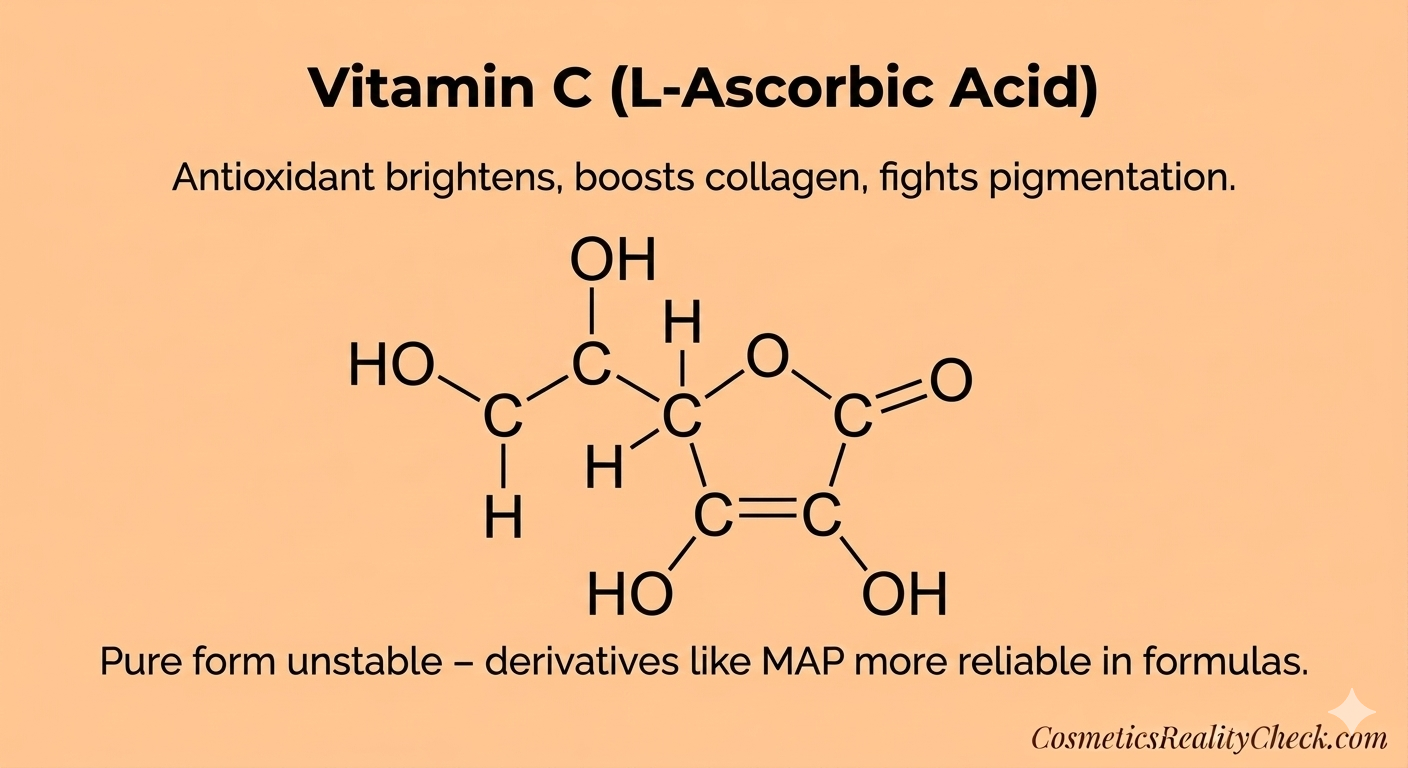
Vitamin C (ascorbic acid) is a powerful water‑soluble antioxidant naturally found in the skin. It helps neutralize free radicals generated by UV light and pollution – unstable molecules that can otherwise accelerate aging and dullness. Topically applied vitamin C stimulates collagen production, assists in the repair of photodamage and reduces melanin formation, which contributes to a more even complexion over time.
Because pure ascorbic acid is unstable and oxidizes quickly when exposed to air and light, skincare formulas often use stabilized derivatives such as sodium ascorbyl phosphate or ascorbyl glucoside to maintain potency longer.
Proven benefits of vitamin C
- Brightens the skin: Reduces dullness and uneven tone by interfering with melanin synthesis.
- Boosts collagen: Encourages fibroblast activity for firmer, smoother skin texture.
- Protects against oxidative stress: Helps neutralize free radicals from sunlight and pollution.
- Supports sunscreen performance: When layered under SPF, vitamin C enhances UV protection.
When used consistently, most people start noticing a brighter, more even tone within four to eight weeks.
Common side effects and why they happen
While vitamin C is generally safe, some users experience mild irritation – especially with stronger L‑ascorbic acid concentrations (15-20 %). This can occur because low‑pH formulas are acidic and may temporarily disrupt the skin barrier.
- Tingling or mild stinging after application
- Dryness or slight peeling
- Redness, especially if layered with retinol or exfoliating acids
To minimize these issues, start with lower strengths (5-10 %) or buffered forms like magnesium ascorbyl phosphate and introduce them gradually.

Who should be careful or avoid vitamin C?
- Those with very sensitive or eczema‑prone skin should patch‑test first and opt for derivative forms.
- People already using strong exfoliants (AHA/BHA) or retinoids should avoid layering all actives at once.
- If your skin stings persistently or shows signs of barrier damage, stop use and simplify your routine.
How to use vitamin C serum effectively
- Apply a few drops of serum in the morning after cleansing and before moisturizer or SPF.
- Store in a dark, airtight bottle away from sunlight to prevent oxidation.
- Pair with broad‑spectrum sunscreen for enhanced protection and better results.
- Do not combine immediately with strong acids or retinoids – alternate morning (vitamin C) and evening (retinoid) instead.
- Consistency matters – daily use shows better long‑term results than sporadic application.
Bottom line
Vitamin C remains one of the best‑researched and most rewarding skincare ingredients for brightening, collagen support and environmental protection. A properly formulated serum, used regularly and stored carefully, can transform dull or uneven skin into a smoother, more radiant complexion – no filter required.