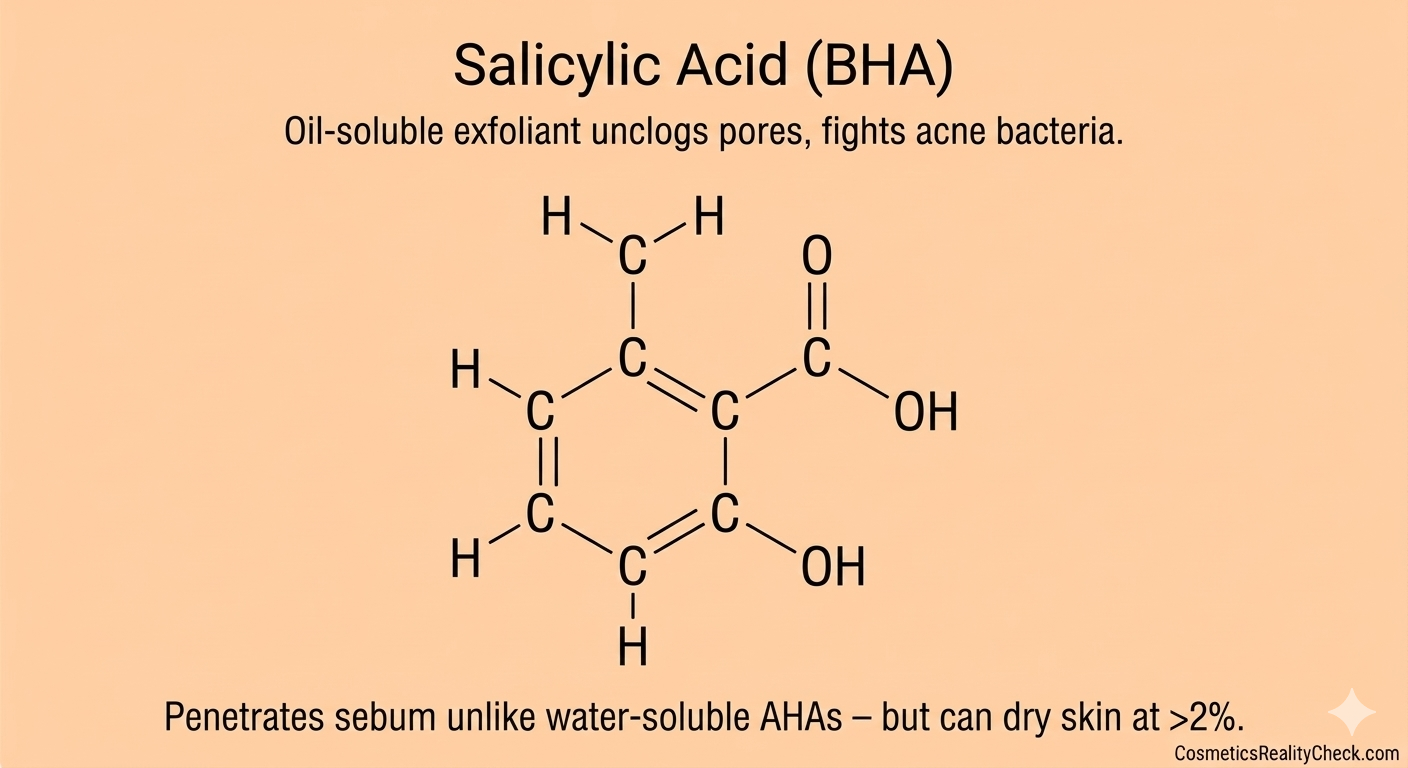
Salicylic acid is a skincare classic that’s earned its reputation as the go‑to ingredient for unclogging pores and keeping breakouts under control. As the best‑known beta‑hydroxy acid (BHA), it’s oil‑soluble, meaning it can actually penetrate into the pores – making it especially effective for oily and acne‑prone skin types. Let’s break down how it works, what to expect and how to use it safely.
What is salicylic acid and how does it work?
Salicylic acid is a type of beta‑hydroxy acid derived from willow bark. Unlike alpha‑hydroxy acids (AHAs), which are water‑soluble and work mainly on the surface, BHAs are oil‑soluble and can travel into the pores where sebum and dead skin cells accumulate.
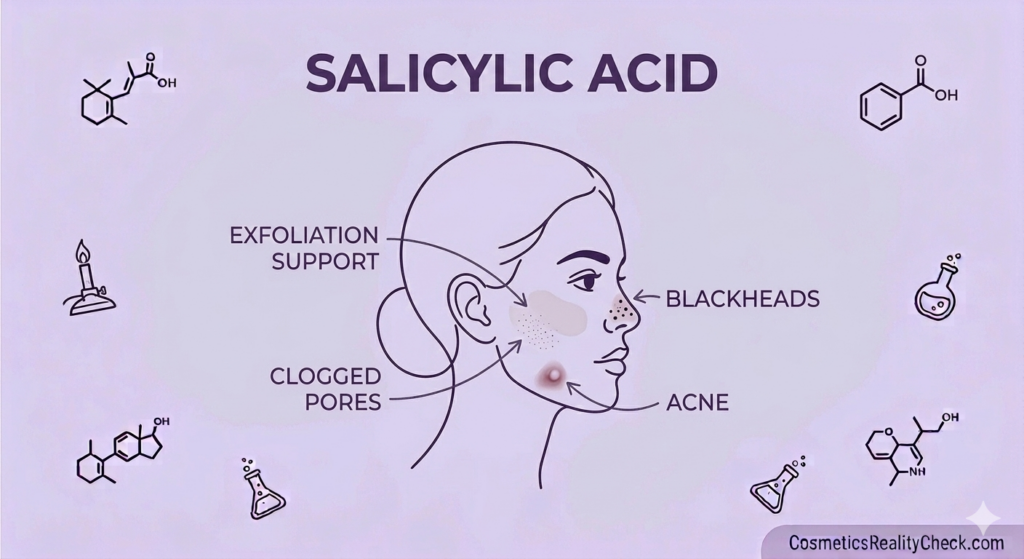
It works by exfoliating inside the pore lining, helping loosen and dissolve the build‑up that leads to blackheads, whiteheads and breakouts. Salicylic acid also has anti‑inflammatory and antibacterial properties, which makes it particularly helpful for calming active pimples and reducing redness.
Proven benefits of salicylic acid
- Clears clogged pores: Dissolves oil and debris that contribute to blackheads and acne.
- Smooths texture: Helps remove surface flakes and refines rough or bumpy skin.
- Reduces inflammation: Calms redness and swelling associated with breakouts.
- Improves oil control: Regular use helps balance excess sebum production over time.
Visible improvements often appear after a few weeks of consistent use – skin tends to feel clearer, smoothe and less congested.
Common side effects and why they happen
Because salicylic acid is an exfoliant, overuse can lead to dryness, flakiness or temporary irritation – especially for those new to actives or using multiple exfoliants at once.
- Dryness or tightness, particularly around the nose and mouth
- Light peeling or flaking in the first week of use
- Slight stinging or tingling after application
These effects are normal in moderation and usually settle once your skin adapts. If burning, excessive redness or prolonged peeling occurs, reduce frequency or pause use.
Who should be careful or avoid salicylic acid?
- Those with very dry, eczema‑prone or highly sensitive skin should start with low concentrations (0.5-1 %) or use it short contact‑time (rinse‑off) formulas.
- People allergic to aspirin (acetylsalicylic acid) should avoid salicylic acid altogether as they may react similarly.
- If pregnant or breastfeeding, check with your doctor before using high‑strength or leave‑on BHA products.
How to use salicylic acid effectively
- Begin with 0.5-2 % strength products, depending on your skin’s tolerance.
- Use after cleansing – either as a toner, serum or treatment pad – and before moisturizer.
- Start with every other night or a few times weekly, then increase once your skin adjusts.
- Always apply broad‑spectrum sunscreen daily. Exfoliants can increase sun sensitivity.
- Do not layer with other strong actives like AHAs, retinoids or peroxides at the same time unless directed by a dermatologist.
Bottom line
Salicylic acid is one of the most effective and research‑backed solutions for breakouts, oily skin and clogged pores. When used correctly – at the right strength, frequency and paired with gentle hydration – it can transform congested skin into a smoother, clearer and healthier‑looking complexion from the inside out.