Preservatives are some of the most controversial cosmetic ingredients, but they’re also among the most important. Without them, most creams, serums and cleansers would become unsafe long before you finish the bottle.
1. Why water + time = microbes
Any product containing water creates a friendly environment for bacteria, yeast and mold, especially once opened and exposed to air, fingers or bathroom humidity. Formulators add preservatives to prevent microbial growth throughout the product’s shelf life and consumer use period, which helps protect both stability and user safety.
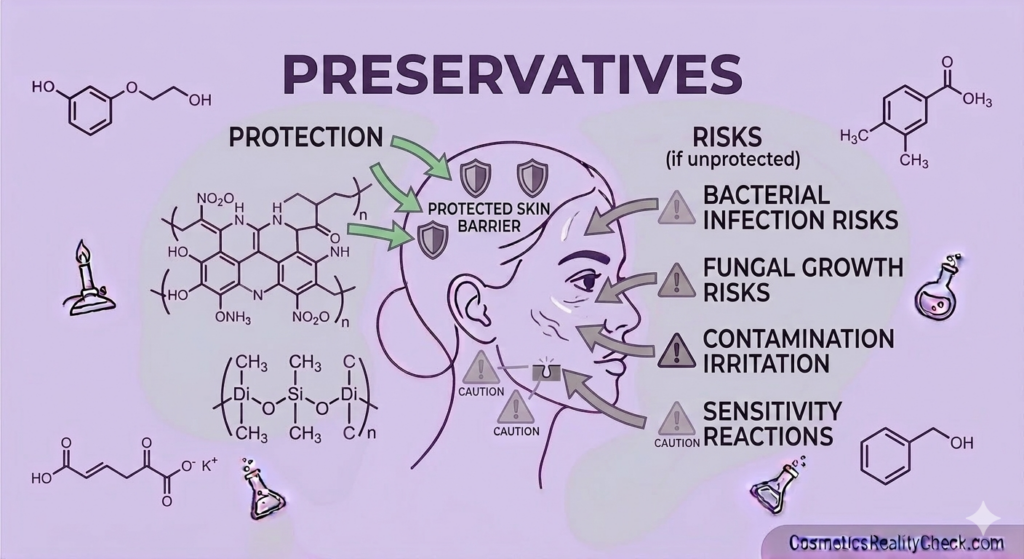
Unpreserved or under‑preserved products can spoil, change odor or color and in the worst cases cause eye infections or skin infections if pathogenic microbes multiply. For this reason, regulators and safety assessors view effective preservation as a basic safety requirement, not an optional extra.
2. Main families of cosmetic preservatives
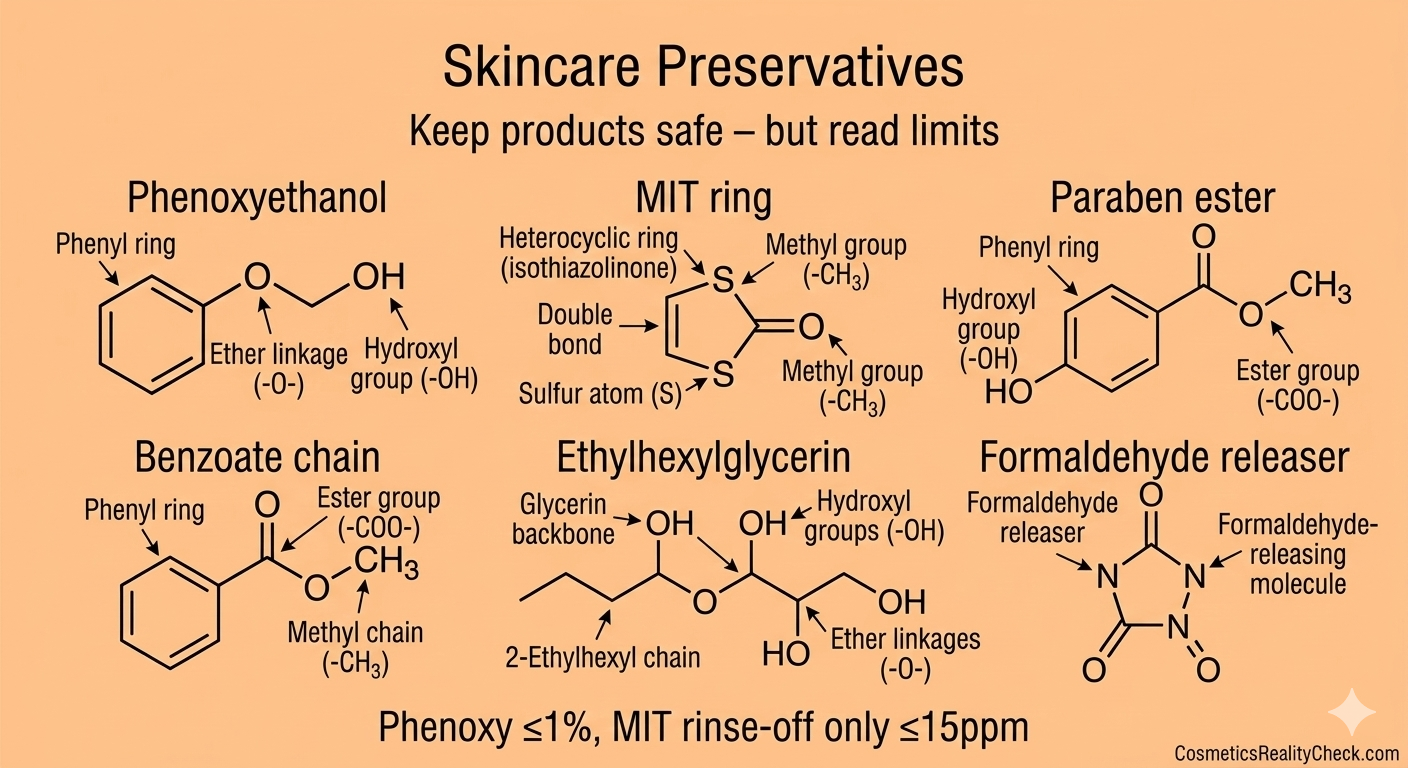
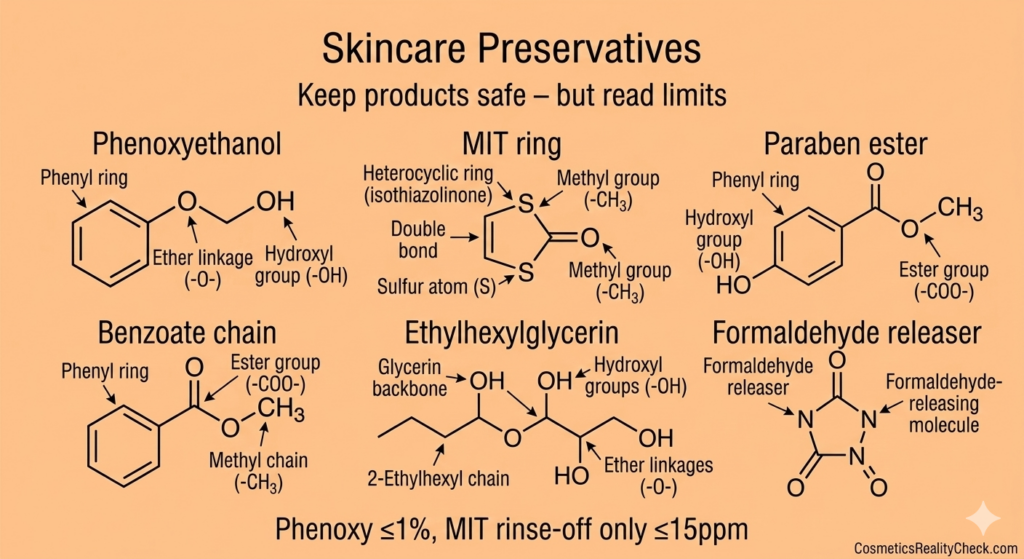
Common preservative families include parabens, formaldehyde‑releasing agents, isothiazolinones, phenoxyethanol and related alcohols and organic acid systems like sodium benzoate and potassium sorbate. Each class comes with its own balance of spectrum (what microbes it kills), stability, cost and irritation or sensitization risk.
For example, parabens are cheap, broad‑spectrum and very stable and multiple large reviews have concluded that shorter‑chain parabens are safe at typical cosmetic concentrations, although some regulators have restricted certain longer‑chain forms. Isothiazolinones are extremely potent at low doses but have a well‑documented record of inducing contact allergy, which is why their use has been heavily restricted, especially in leave‑on products.
3. How regulators decide what’s acceptable
In the EU, preservatives are only allowed if they appear in Annex V of the cosmetics regulation, which specifies exactly which substances may be used and at what maximum concentrations. New or controversial preservatives are evaluated by SCCS, which reviews animal and human data, estimates consumer exposure from real‑world product use and determines whether the margin of safety is adequate for various age groups and product types.
The Cosmetic Ingredient Review panel performs similar evaluations for the US market, publishing assessments that typically conclude ingredients such as phenoxyethanol and many parabens are safe as used up to defined concentration limits. National agencies like Health Canada cross‑reference these reviews with their own assessments and may place some preservatives on a “hotlist” of substances that are restricted or discouraged.
4. Are “natural” preservatives safer?
So‑called natural preservatives – like certain organic acids, benzyl alcohol from plant sources or ferment filtrates – can be good options in some formulas but are not automatically safer than synthetic ones. Many natural systems have a narrower spectrum of antimicrobial activity, require tighter pH ranges or need to be used at higher concentrations, which can increase the risk of irritation in sensitive users.
Essential oils used as part of a preservation system may appeal to “clean beauty” marketing, but they contain known fragrance allergens and are a common cause of contact dermatitis when used at appreciable levels. In contrast, some well‑studied synthetic preservatives have low sensitization rates and decades of safe use data when formulated properly.
5. Practical tips for choosing preserved products
When evaluating preservatives, context is everything:In a rinse‑off product like a cleanser or shampoo, a preservative with some irritation potential may still be acceptable because contact time is short.
In a leave‑on eye cream or product for compromised skin, gentler systems with lower sensitization risk are usually preferred, even if they are more expensive or technically demanding.
If you know you react to a particular preservative family – parabens, isothiazolinones, certain formaldehyde releasers – patch testing and label reading are key and you can often find products using alternative systems designed for sensitive skin. Rather than seeking completely preservative‑free water‑based products, which may pose a greater microbiological risk, it is more realistic to aim for well‑preserved formulas that use systems with a good safety record for your skin type and use case.