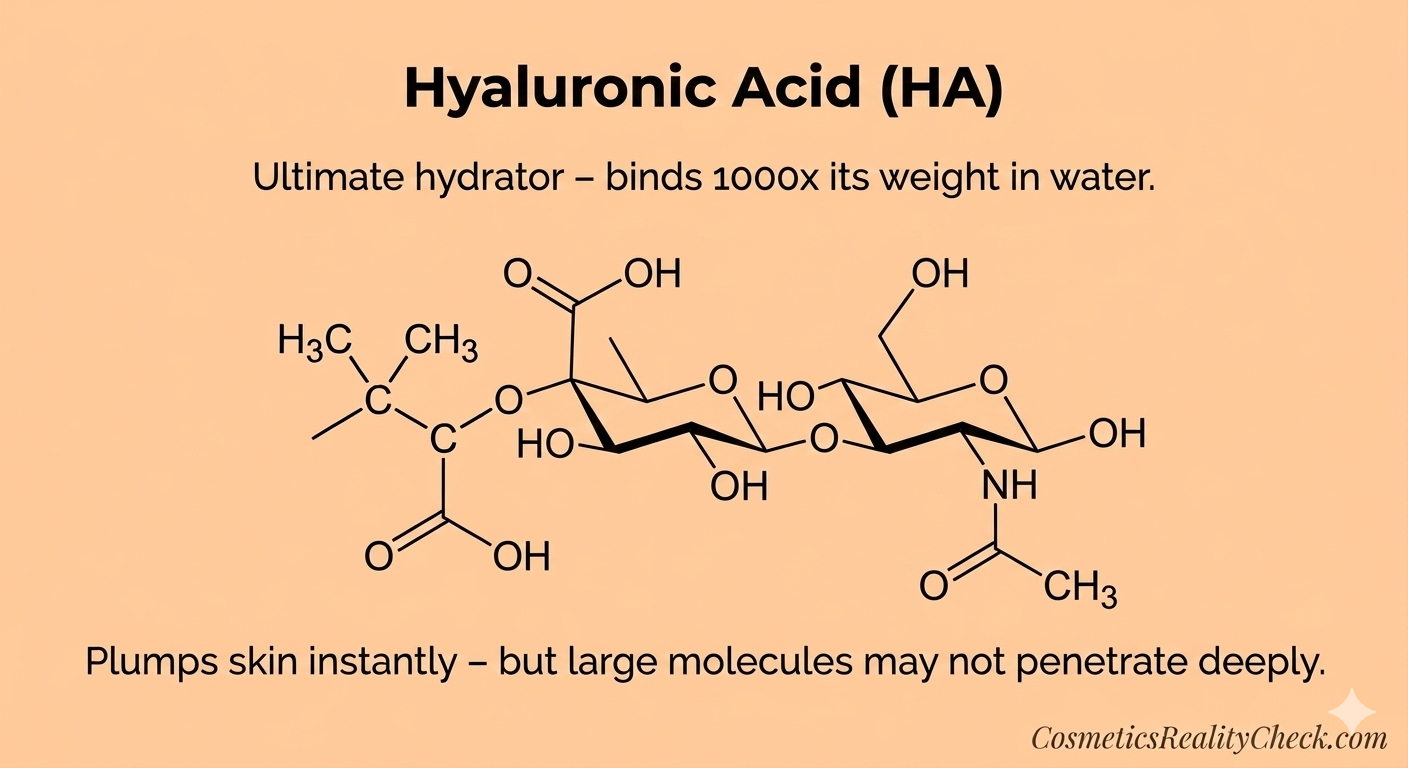
Hyaluronic acid is one of skincare’s biggest buzzwords – and unlike many trends, this one is backed by real science. Known for its remarkable ability to attract and hold water, hyaluronic acid is a hydration powerhouse found naturally in your skin. But, as we age and face environmental stressors, our natural levels decline. Here’s what that means for your skin and how to replenish it effectively.
What is hyaluronic acid and how does it work?
Hyaluronic acid (HA) is a type of sugar molecule (a glycosaminoglycan) naturally present in our skin, eyes and connective tissue. It acts like a sponge, binding up to 1,000 times its weight in water to keep cells plump and hydrated. When applied topically, it helps draw moisture to the skin’s surface and supports the skin barrier, leading to smoother, softer and more supple skin.
However, because environmental factors and aging reduce our natural HA levels, adding it back through skincare helps maintain hydration and elasticity, especially when partnered with other barrier-supporting ingredients.
Proven benefits of hyaluronic acid
- Deep hydration: Attracts water from the environment and skin’s deeper layers, increasing moisture levels.
- Plumps fine lines: Temporarily fills and smooths the appearance of wrinkles due to improved water content in the skin.
- Improves barrier function: Helps repair and protect against transepidermal water loss (TEWL).
- Boosts elasticity and glow: Well-hydrated skin reflects light better and feels supple to the touch.
Different molecular weights of HA penetrate at varying levels – higher weights stay on the surface to smooth and hydrate instantly, while lower weights absorb deeper for longer-term moisture retention.
Common side effects and why they happen
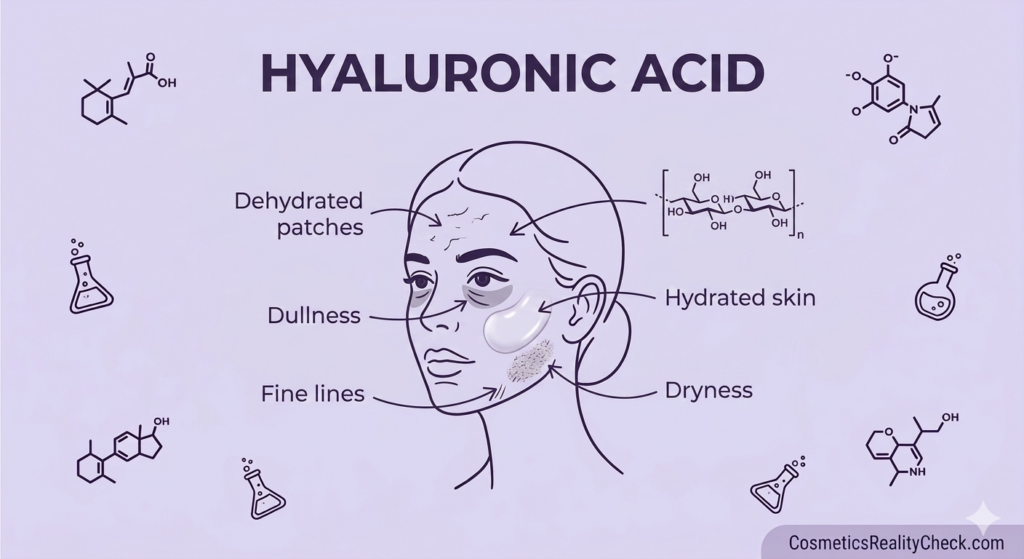
Hyaluronic acid is generally very gentle, but incorrect use can sometimes cause dryness instead of hydration. This occurs when applied to dry skin in low-humidity environments – HA can pull moisture from deeper skin layers rather than from the air.
- Temporary dryness or tightness in low humidity
- Stickiness if used in excessive amounts
- Pilling when layered with certain silicones or heavy creams
To avoid these issues, always apply HA to slightly damp skin and seal it in with a moisturizer on top.
Who should be careful or avoid hyaluronic acid?
- Those living in very dry climates should always use a moisturizer afterward to prevent moisture loss.
- People with compromised skin barriers (eczema, active dermatitis) should start with lower concentrations or simpler formulas.
- If you experience persistent tightness or redness, reduce frequency and use alongside barrier-repair creams or ceramides.
How to use hyaluronic acid correctly
- Apply HA serum on freshly cleansed, slightly damp skin.
- Use 1-2 drops rather than over-application – more doesn’t always mean better.
- Follow immediately with a moisturizer to seal in hydration.
- Can be used morning and night and pairs seamlessly with niacinamide, peptides and ceramides.
- During winter or in dry indoor air, layer HA under a thicker cream or oil to minimize evaporation.
Bottom line
Hyaluronic acid is the skin’s natural moisture magnet – and while your body makes it, you lose more of it every year. By replenishing it through a thoughtfully formulated serum and pairing it with a good moisturizer, you can restore a smooth, hydrated and healthy-looking complexion that feels as good as it looks.