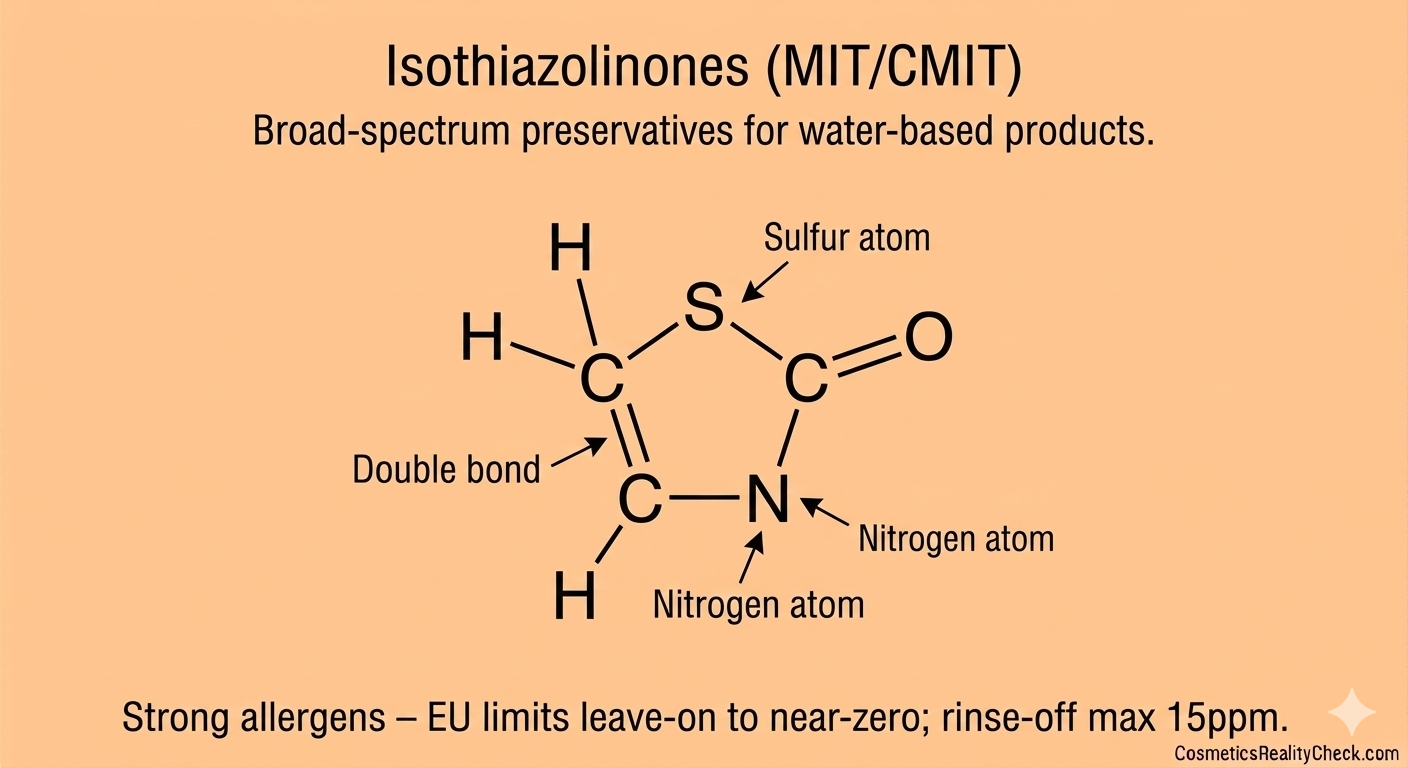
Isothiazolinones (like methylisothiazolinone/MI and methylchloroisothiazolinone/MCI) are potent broad-spectrum preservatives that replaced parabens in many cosmetics. While highly effective at preventing microbial growth, they’ve earned strict regulations due to widespread contact allergies and skin sensitization. Here’s why brands still use them – and the limits you need to know.
What are isothiazolinones and how do they work?
Isothiazolinones are synthetic heterocyclic compounds with powerful antimicrobial action. They disrupt microbial cell metabolism and enzyme function, killing bacteria, yeast and mold at very low concentrations (ppm levels). Common variants include:
MI (methylisothiazolinone): Standalone use in rinse-off products.
MCI/MI (Kathon CG): 3:1 blend for shampoos, body washes.
BIT/OIT: Industrial uses (paints, cleaners – not cosmetics).
EU regulations ban MI from leave-on products since 2017 and cap MCI/MI at 0.0015% (15ppm) in rinse-offs only.
Why brands use them despite restrictions
- Ultra-effective: Works at trace levels (100x more potent than parabens).
- Cost-efficient: Small amounts preserve entire batches.
- Water-stable: Functions across pH ranges in shampoos, lotions.
- Paraben alternative: Filled void when parabens faced scrutiny.
However, rising allergy cases prompted bans – with MI sensitivity now affecting 4-7% of dermatitis patients.
Common reactions and why they happen
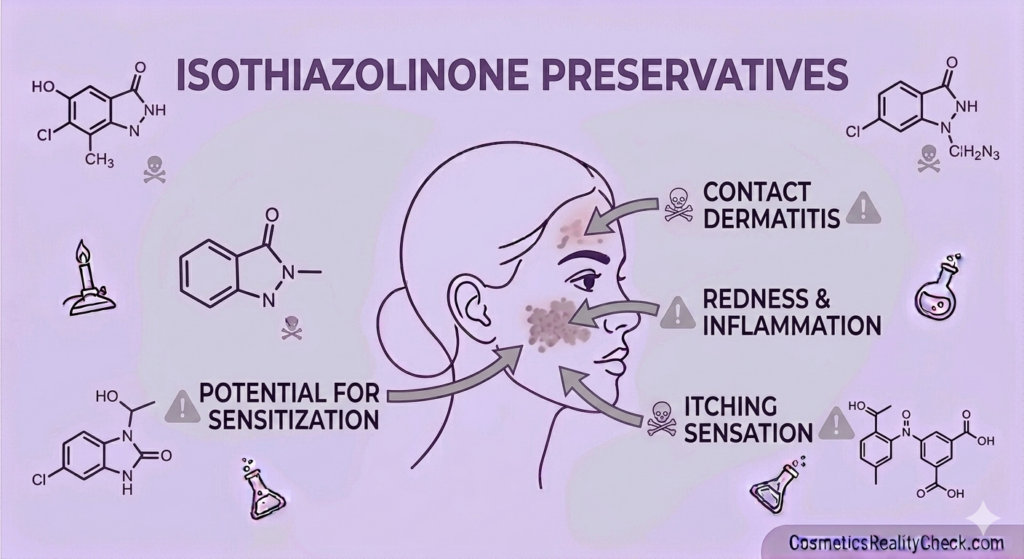
Isothiazolinones are potent haptens – small molecules that penetrate skin and trigger immune responses. Airborne exposure from wet paint or mist worsens sensitization.
- Contact dermatitis: Redness, itching, eczema (hands, face, axillae).
- Airborne allergy: From shower steam or workplace exposure.
- Cross-reactivity: MI sensitizers often react to MCI too.
Even ppm levels cause reactions in sensitized individuals; rinse-off limits reduce but don’t eliminate risk.
Who should avoid isothiazolinones?
- Allergy sufferers: Anyone with eczema, atopic dermatitis or preservative sensitivity.
- Leave-on users: Legally banned in lotions/creams (check “free of MI/MCI”).
- Children/babies: Higher sensitization risk; prefer natural preservatives.
- Occupational exposure: Hairdressers, painters, cleaners face higher doses.
How to spot and avoid isothiazolinones
- Scan labels for Methylisothiazolinone, MI, MCI/MI, Kathon CG, CMIT/MIT.
- Choose “preservative-free,” “MI-free,” or anhydrous (oil-based) products.
- For allergies, request patch testing from dermatologists.
- Alternatives: Phenoxyethanol, sodium benzoate, potassium sorbate (less sensitizing).
- Rinse-off only: Stick to EU 0.0015% MCI/MI limit standards.
Bottom line
Isothiazolinones excel as preservatives but earned restrictions due to high sensitization rates – now banned from leave-on cosmetics and capped in rinse-offs. While safe for most at regulated levels, they’re a top contact allergen for sensitive skin. If you experience persistent reactions, go MI/MCI-free; the industry’s shift toward gentler alternatives continues.