Acne-prone skin needs ingredients that unclog pores, control oil, calm inflammation and prevent scarring without stripping the barrier. Here are the most effective, evidence-based actives.
1. Salicylic acid (BHA): The pore-clearer
Salicylic acid is a beta hydroxy acid (BHA) that penetrates oil-filled pores to dissolve dead skin cells, sebum and debris from the inside out.
Unlike water-soluble acids (AHAs), salicylic acid is oil-soluble, making it uniquely effective for blackheads, whiteheads and clogged pores.
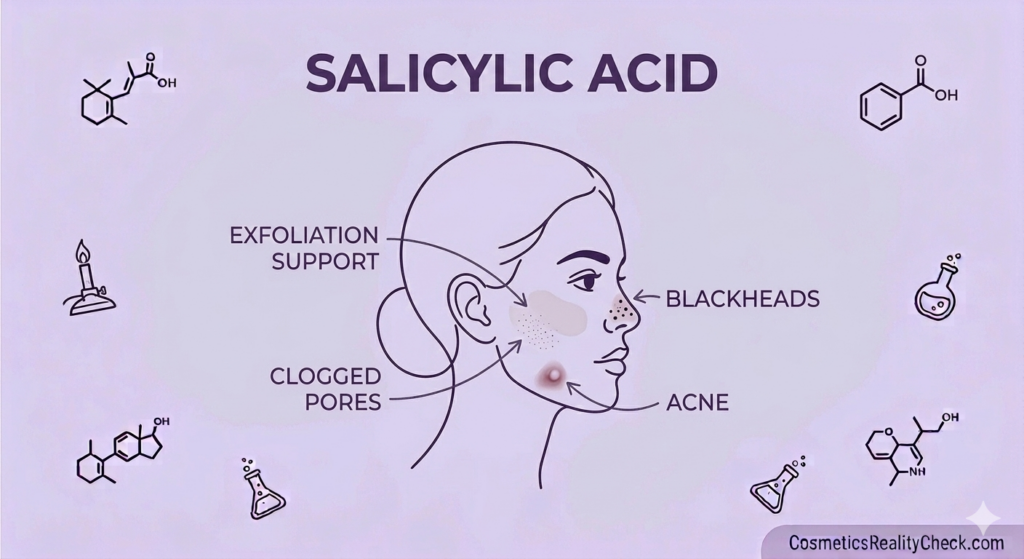
It also has anti-inflammatory and mild antibacterial properties, calming redness and reducing acne-causing bacteria.
Use 0.5-2% in cleansers, toners or serums 1-2 times daily.
2. Benzoyl peroxide: The bacteria killer
Benzoyl peroxide kills Cutibacterium acnes (the main acne-causing bacteria), unclogs pores and reduces inflammation.
It’s one of the most effective over-the-counter acne treatments, available in 2.5-10% strengths.
Start with 2.5% to minimize irritation and dryness; higher percentages aren’t necessarily more effective but do increase side effects.
Warning: benzoyl peroxide bleaches fabrics, so use white towels and pillowcases.
3. Niacinamide (Vitamin B3): The oil regulator
Niacinamide at 2-4% controls sebum production, reduces pore appearance, calms inflammation and fades post-acne dark spots without irritation.
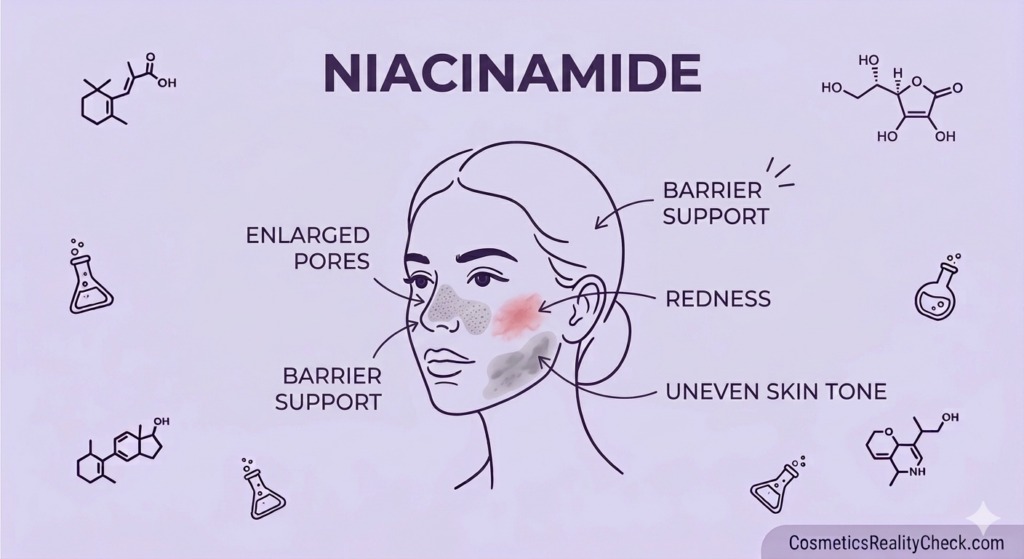
A clinical study found 4% niacinamide is safe and effective for mild to moderate acne.
It also strengthens the skin barrier, making it ideal for sensitive, acne-prone skin that can’t tolerate harsh actives.
4. Retinoids (Retinol, Adapalene): The long-term fix
Retinoids speed up cell turnover, prevent pores from clogging, reduce comedones (blackheads/whiteheads) and fade acne scars over time.
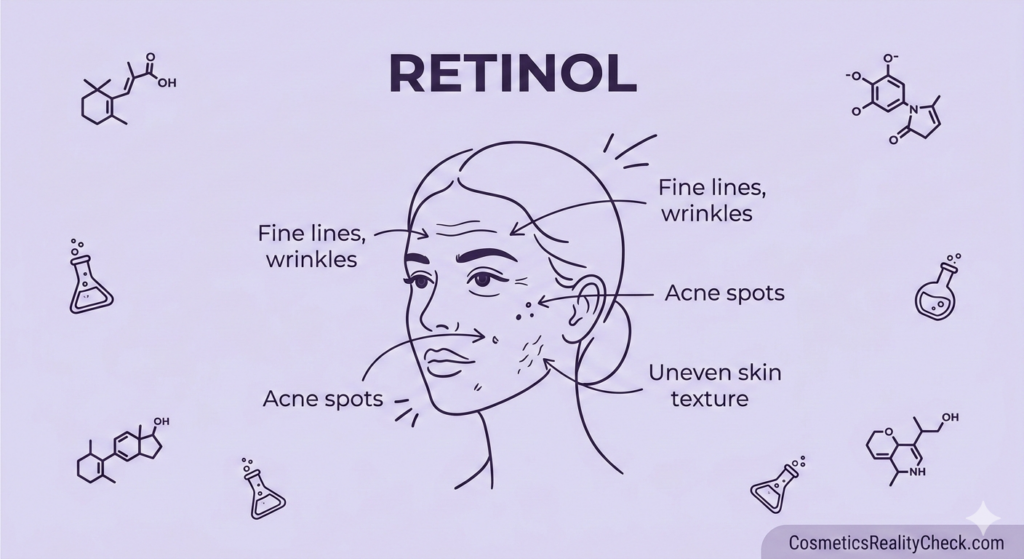
Adapalene 0.1% gel (brand name Differin) is available over-the-counter and is one of the most effective topical acne treatments.
Start 2-3 nights per week and gradually increase; always use sunscreen, as retinoids increase photosensitivity.
5. Azelaic acid: The multi-tasker
Azelaic acid (10-15%) targets acne-causing bacteria, reduces inflammation, unclogs pores and gently fades post-inflammatory hyperpigmentation (PIH) – especially important for darker skin tones prone to dark spots after breakouts.
It’s gentler than benzoyl peroxide and retinoids, making it suitable for sensitive, acne-prone skin.
6. Hyaluronic acid: The hydrator
Even oily, acne-prone skin needs hydration. Hyaluronic acid is a lightweight, non-comedogenic humectant that draws water into the skin without adding oil or clogging pores.
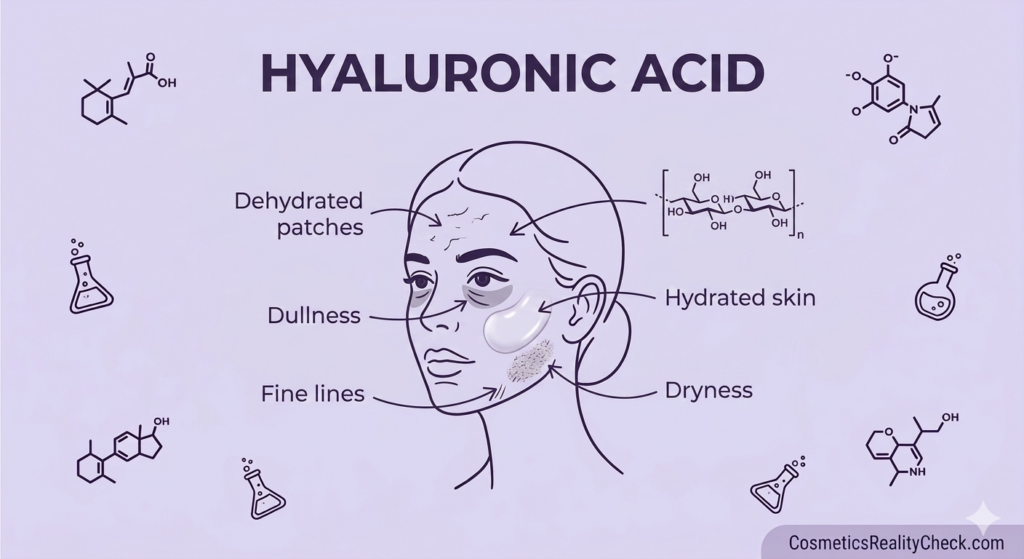
It helps counteract dryness from acne treatments and supports barrier function.
7. Ceramides: The barrier protector
Ceramides restore and strengthen the skin barrier, which is often compromised by harsh acne treatments.
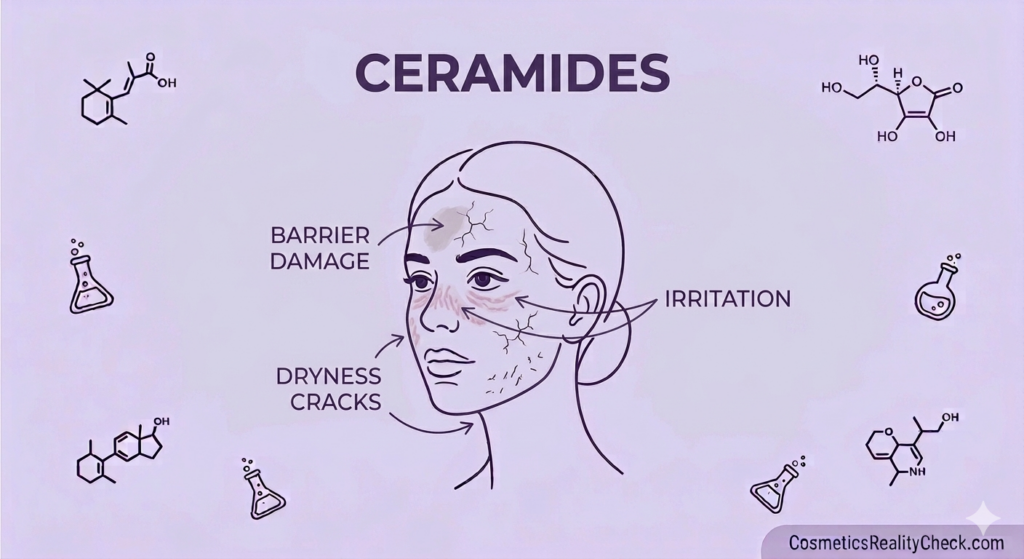
A healthy barrier reduces transepidermal water loss, calms irritation and prevents the over-production of oil that can worsen acne.
Building an acne routine
Morning:
- Gentle cleanser (with or without salicylic acid)
- Niacinamide serum
- Lightweight, non-comedogenic moisturizer
- Broad-spectrum SPF 30+ (mandatory with retinoids/acids)
Evening:
- Cleanser
- Targeted treatment: salicylic acid, azelaic acid or retinoid
- Spot treatment: benzoyl peroxide on active pimples only
- Moisturizer with ceramides and hyaluronic acid
What to avoid
- Harsh physical scrubs (worsen inflammation)
- Heavy oils and butters (clog pores)
- Fragrance and essential oils (irritate and sensitize)
- Over-washing or stripping (triggers more oil production)
Bottom line
The most effective acne routine combines oil control (salicylic acid, niacinamide), bacteria reduction (benzoyl peroxide), cell turnover (retinoids) and barrier support (ceramides, hyaluronic acid).
Start with one active, introduce slowly and always protect with sunscreen.