Rosacea-prone skin needs gentle, anti-inflammatory ingredients that strengthen the barrier and reduce vascular reactivity without triggering flare-ups.
Understanding rosacea
Rosacea is a chronic inflammatory skin condition characterized by persistent redness, visible blood vessels (telangiectasia), papules/pustules and burning or stinging sensations.
Triggers include UV exposure, heat, spicy foods, alcohol, stress and irritating skincare.
1. Azelaic acid: The multi-tasker
Azelaic acid at 15% is FDA-approved for rosacea and works through multiple mechanisms: reducing inflammatory papules and pustules, inhibiting free radical production, improving persistent redness and fading post-inflammatory hyperpigmentation.
It can tingle or sting initially, so start 2–3 nights per week and build tolerance slowly.
2. Niacinamide: The barrier strengthener
Niacinamide at 4-5% reduces inflammation and redness, strengthens the barrier, improves hydration and is extremely well-tolerated even by very sensitive rosacea-prone skin.
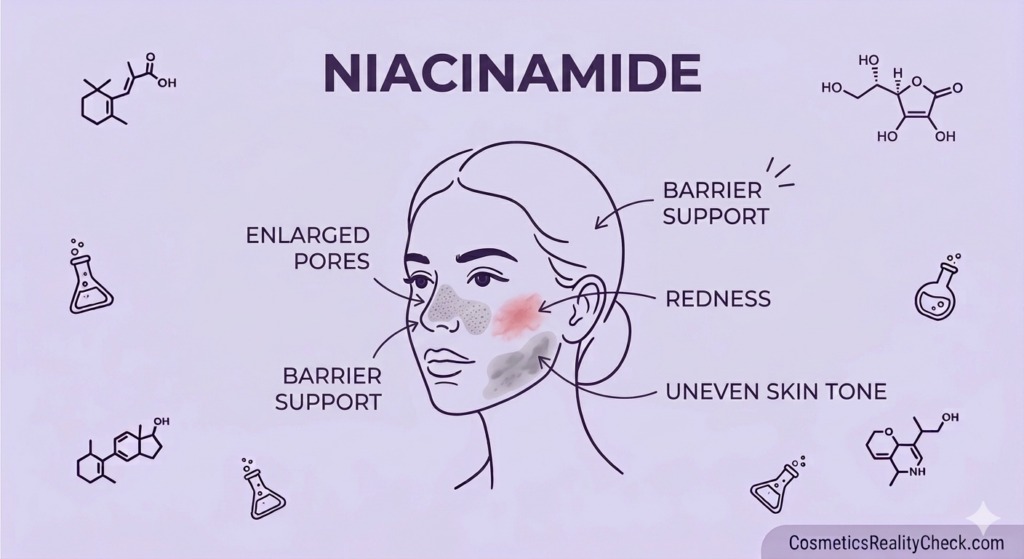
It’s ideal for mild rosacea with sensitivity or as a calming base layer before stronger actives.
3. Centella asiatica (Cica): Anti-inflammatory botanical
Centella asiatica has proven anti-inflammatory and wound-healing properties that calm redness, support barrier repair and reduce irritation.
It’s a staple in K-beauty for sensitive and compromised skin.
4. Green seaweed extract and vitamin K: Vascular support
Ingredients targeting microvessels, like green seaweed extract and vitamin K-rich safflower oil, reduce the appearance of visible blood vessels and capillary fragility.
These are often combined with azelaic acid and niacinamide in redness-relief creams.
5. Allantoin and bisabolol: Soothing agents
Allantoin and bisabolol (from chamomile) have calming, anti-irritant properties that reduce burning, stinging and reactive redness without active exfoliation.
They’re commonly found in gentle, fragrance-free moisturizers for rosacea.
6. Hyaluronic acid: Gentle hydration
Hyaluronic acid provides lightweight, non-irritating hydration that supports the barrier without heaviness or risk of triggering sensitivity.
Which ingredient to choose?
Mild or vascular rosacea (redness and visible capillaries):
→ Niacinamide for calming and strengthening
Inflammatory rosacea (pustules and bumps):
→ Azelaic acid for antimicrobial and anti-inflammatory actionExtremely sensitive rosacea:
→ Niacinamide due to high toleranceRosacea with post-inflammatory marks:
→ Azelaic acid for direct depigmenting effect
Can you use them together?
Yes. Apply niacinamide first (lightweight serum), let it absorb, then apply azelaic acid (gel or cream).
If irritation occurs, alternate days instead of layering.
Sample rosacea routine
Morning:
- Gentle, fragrance-free cleanser or micellar water
- Niacinamide serum (4–5%)
- Barrier-repair cream with ceramides + centella
- Mineral sunscreen SPF 50+ (zinc oxide)
Evening (3× per week to start):
- Gentle cleanser
- Azelaic acid gel/cream (15%)
- Moisturizer with ceramides and green seaweed extract
What to avoid with rosacea
- Fragrance and essential oils (major triggers)
- Alcohol denat., witch hazel, menthol, eucalyptus
- Physical scrubs and harsh exfoliants
- Hot water and steam
- High-percentage acids and strong retinoids (until barrier is strong)
Bottom line
The most effective rosacea routine combines anti-inflammatory actives (azelaic acid, niacinamide, centella), barrier-strengthening lipids (ceramides) and vascular-supporting botanicals (green seaweed, vitamin K) with mineral sunscreen and avoidance of common triggers.