If your skincare routine could use a strong foundation, ceramides are where to start. These naturally occurring lipids (fats) are the glue that holds the skin together – literally keeping moisture in and irritants out. As your skin loses ceramides over time due to age, harsh cleansers or cold weather, the barrier weakens, leading to dryness, dullness and sensitivity. Here’s why replenishing them is essential for healthy, resilient skin.
What are ceramides and how do they work?
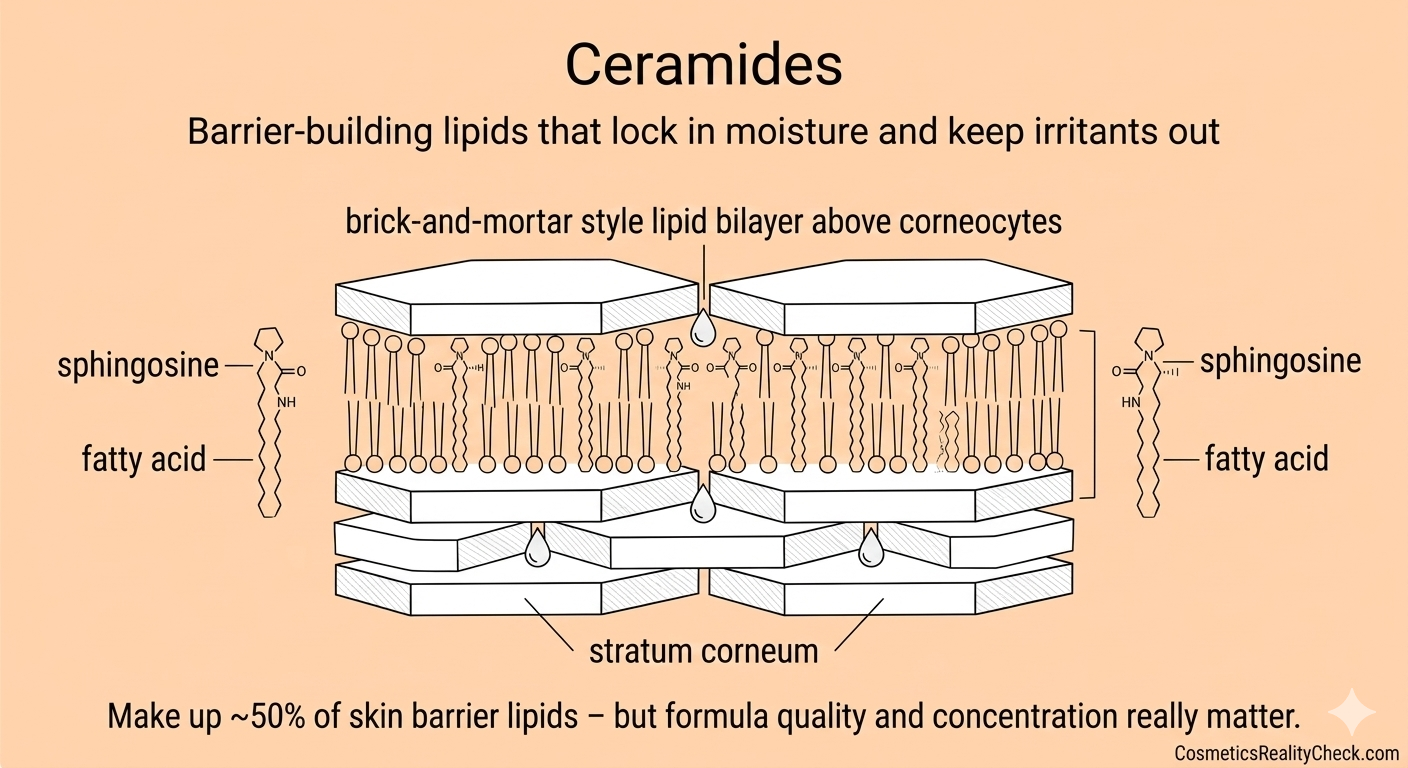
Ceramides are waxy, lipid‑like molecules that make up more than 50% of the skin’s outer layer (the stratum corneum). They sit between skin cells like mortar between bricks, forming a strong, waterproof barrier. This barrier prevents transepidermal water loss (TEWL) while also keeping bacteria, pollution and allergens out.
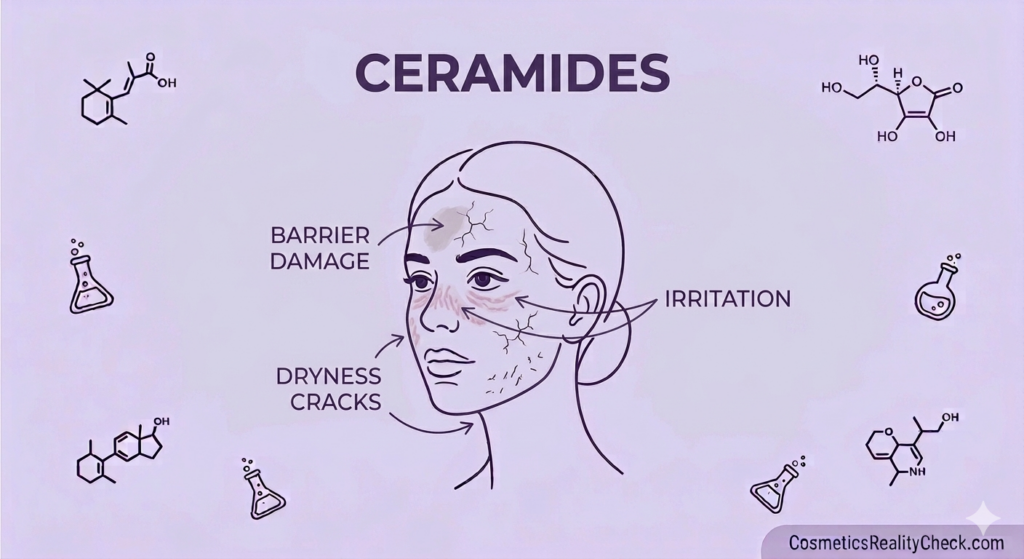
When levels drop, the skin barrier becomes compromised – resulting in dryness, tightness or increased sensitivity. Topically applied ceramides mimic those naturally found in the skin, helping to restore balance, lock in hydration and improve texture over time.
Proven benefits of ceramides
- Strengthens the skin barrier: Replenishes lost lipids to protect against dehydration and irritation.
- Boosts hydration: Helps water stay where it belongs – inside the skin.
- Soothes sensitivity: Reduces redness, stinging and discomfort linked to barrier damage.
- Enhances the effects of actives: Makes the skin more tolerant of exfoliants, retinol and acids.
- Supports anti‑aging care: Well‑hydrated, strong skin looks smoother and more supple.
Regular use of ceramide‑rich moisturizers leads to visible improvement in skin comfort and elasticity, especially during colder months or after irritation episodes.
Common side effects and why they happen
Ceramides are usually non‑irritating and safe for all skin types. In rare cases, heaviness or minor congestion can occur if the formula is too rich for oily skin. This is not an allergic reaction – it simply means the texture may be too occlusive.
- Feeling of slight greasiness (from rich creams)
- Minimal congestion in very oily or acne‑prone areas
Lightweight gel‑creams or emulsions with ceramides are better options for those who prefer non‑heavy textures.
Who should be careful or avoid ceramides?
- Almost everyone benefits from ceramides, but extremely oily skin types may prefer low‑lipid or oil‑free versions.
- Those allergic to certain fatty alcohols or silicones in formulations should check ingredient lists carefully.
- If your skin is actively inflamed (e.g., during a severe eczema flare), use gentle, dermatologist‑approved formulas only.
How to use ceramides effectively
- Apply a ceramide‑rich moisturizer as the final step in your routine – morning and evening.
- For very dry skin, layer it over a hydrating serum like hyaluronic acid.
- Pair ceramides with ingredients like niacinamide, cholesterol and fatty acids for optimal barrier repair.
- After chemical exfoliation or retinol use, apply ceramides to calm and restore the skin.
- Use consistently – even after irritation subsides – to maintain long‑term barrier strength.
Bottom line
Ceramides are the cornerstone of a healthy skin barrier. Whether your skin is dry, sensitive or over‑treated, these lipids work quietly but powerfully to restore balance and comfort. Think of them as the skin’s natural armor: once you strengthen it, everything else in your routine performs better – and your complexion stays hydrated, smooth and resilient.