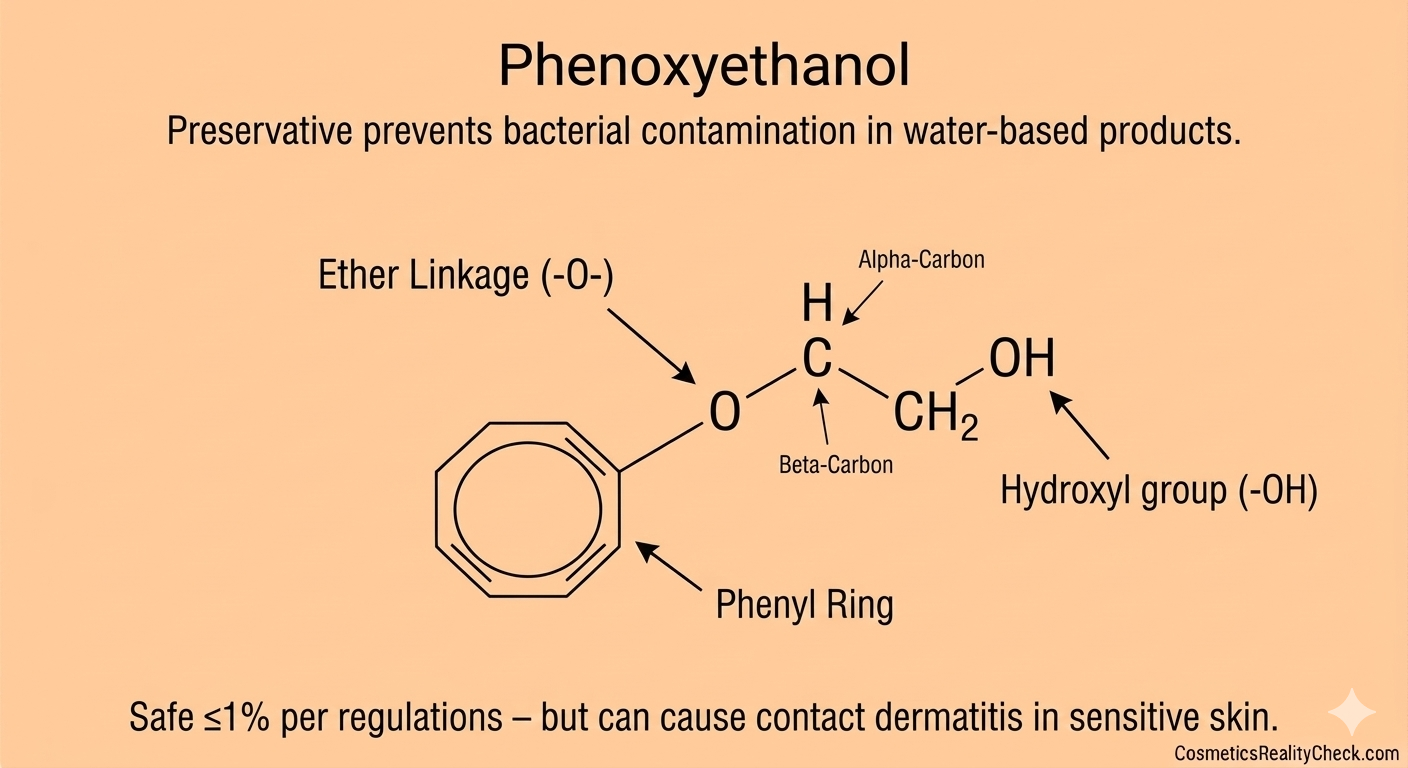
Phenoxyethanol appears on nearly every cosmetic ingredient list as a go-to preservative – and for good reason. It prevents bacterial, yeast and mold growth in water-based products, keeping them safe and stable for months. But social media claims about toxicity have raised eyebrows. Here’s the actual science behind its safety, concentration limits and who should be cautious.
What is phenoxyethanol and how does it work?
Phenoxyethanol is a synthetic glycol ether with broad-spectrum antimicrobial properties. It disrupts microbial cell membranes, preventing the growth of bacteria (Gram-positive and negative), yeast and fungi in cosmetics. This makes it effective even at low concentrations (typically 0.5-1%) and stable across a wide pH range.
Unlike parabens, it’s colorless, odorless and doesn’t alter product texture. Regulatory bodies cap it at 1% maximum in cosmetics worldwide, where it balances preservation with safety.
Proven safety profile
- Regulator approved: Safe up to 1% by FDA, EU SCCS, CIR and Japan standards.
- Low absorption: Minimal skin penetration; doesn’t bioaccumulate.
- Rare sensitizer: Contact allergy affects <0.4% of users – far less than fragrances or nickel.
- Better than alternatives: More stable than natural preservatives; avoids endocrine concerns of parabens.
Animal studies show toxicity only at 200x+ cosmetic exposure levels, confirming margin of safety.
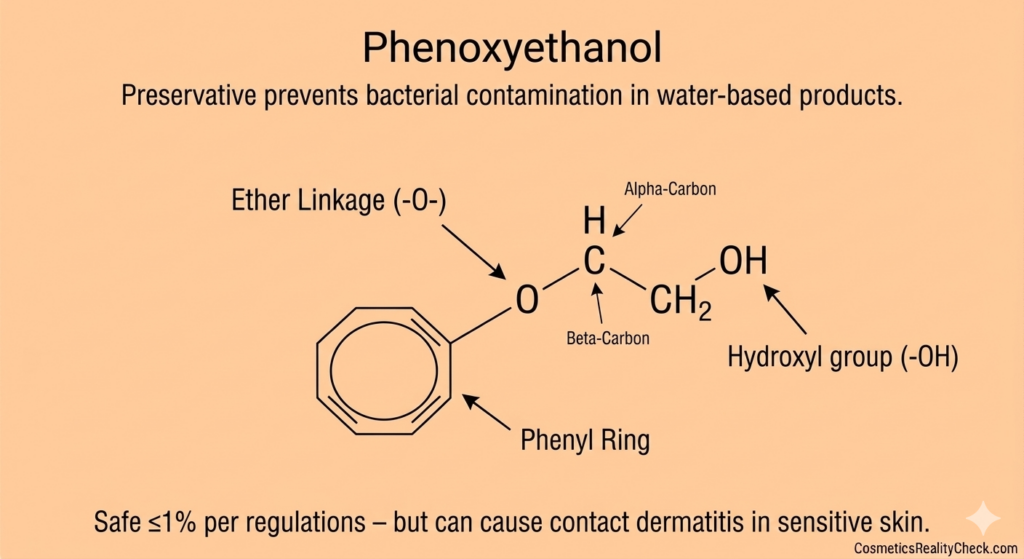
Common concerns and why they happen
Most “toxicity” fears stem from misuse or exaggeration. Rare reactions occur, but context matters:
- Contact dermatitis: Eczema or hives in <1% of users, usually from product sensitivity.
- Infant exposure: High oral doses (e.g., talc powder) affected nervous system – irrelevant to rinse-off/topical use.
- Layering risk: Multiple 1% products daily could theoretically accumulate, though studies show no issue.
Social media often cites industrial uses (antifreeze) without noting cosmetic-grade purity.
Who should be careful or avoid phenoxyethanol?
- Known allergy: Patch test first; anaphylaxis is extremely rare but documented.
- Babies under 3: Prefer products without or use preservative-free where possible.
- Pregnant/breastfeeding: Extra caution recommended, though no direct evidence of harm.
For everyone else, 1% phenoxyethanol poses negligible risk.
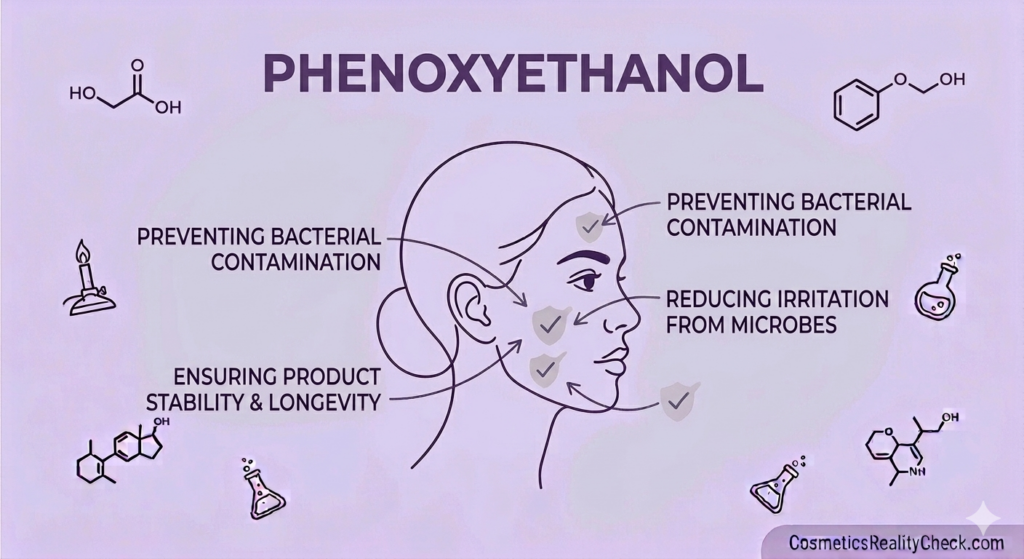
How to use phenoxyethanol-containing products safely
- Stick to reputable brands using cosmetic-grade (not industrial) phenoxyethanol.
- Avoid excessive layering of leave-on products if concerned about cumulative exposure.
- Patch test new products containing it, especially if you have eczema or allergies.
- For babies, prioritize anhydrous (oil-based) or single-use products.
- Store properly to maximize efficacy and minimize contamination risk.
Bottom line
Phenoxyethanol is one of the safest, most effective preservatives available at regulated 1% concentrations – backed by decades of data and global approvals. Allergy risks are minimal and overstated online; it prevents far more harm (infections from spoiled products) than it causes. If you have sensitivities or prefer “clean beauty”, seek alternatives – but for most, this workhorse keeps cosmetics safe without compromise.