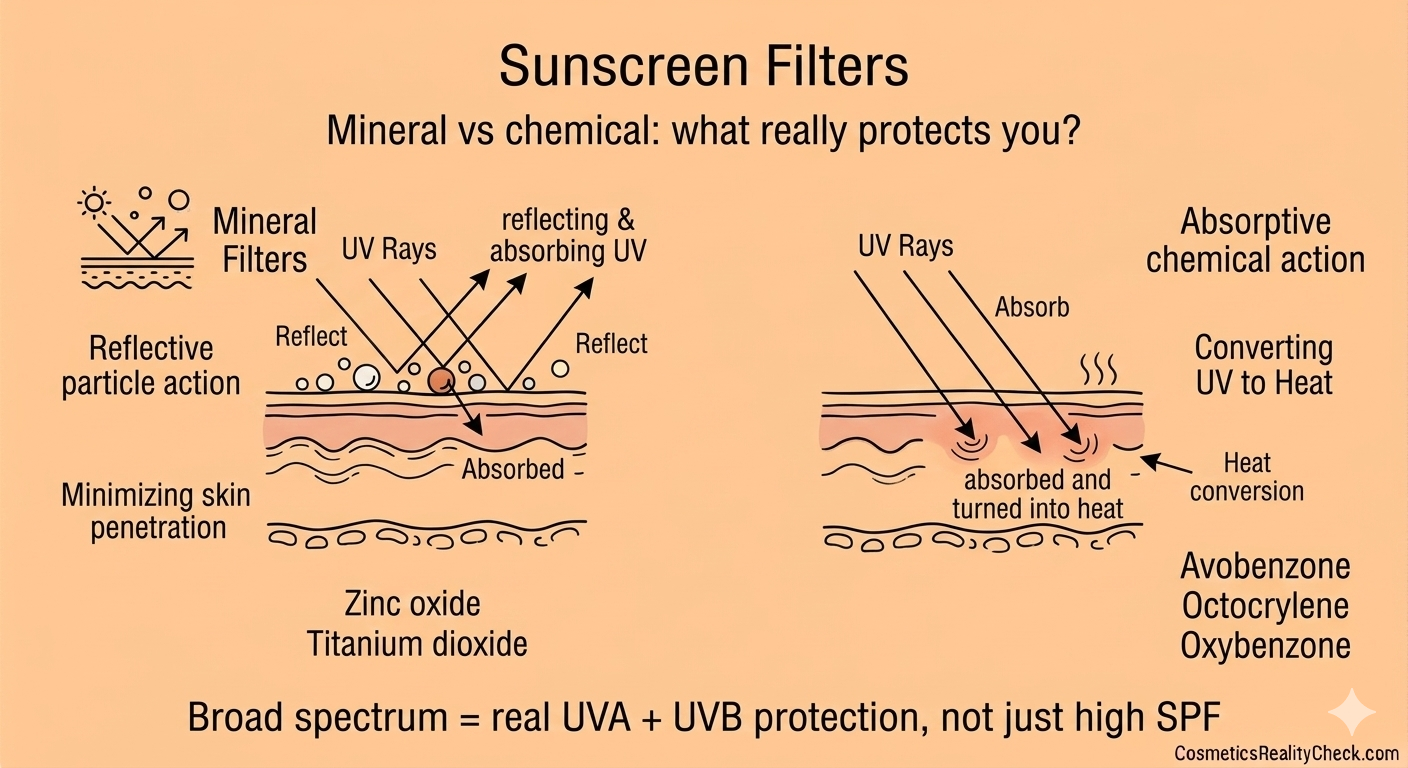
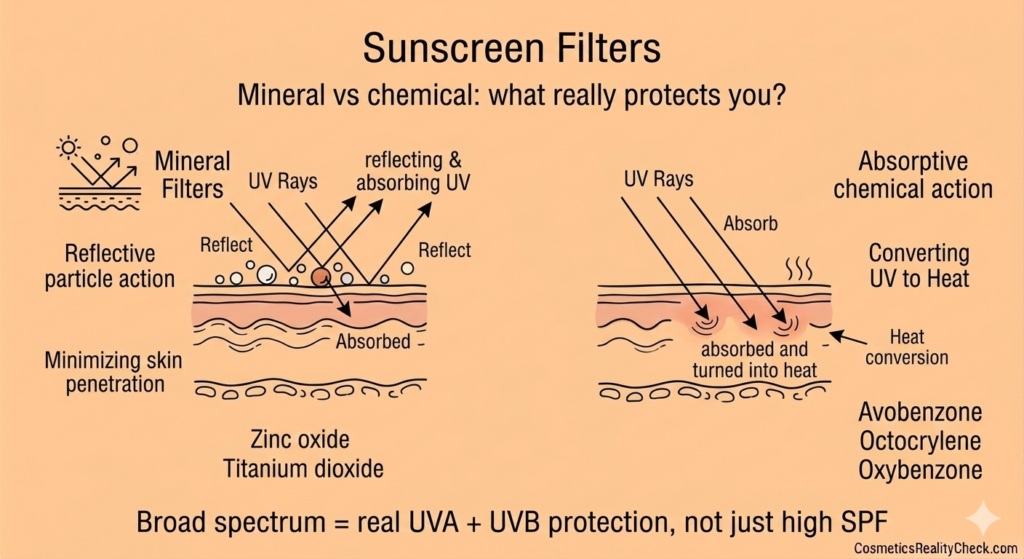
Sunscreen filters are your first line of defense against UV damage, but understanding how they actually protect your skin can help you choose the right one. Mineral filters like zinc oxide and titanium dioxide sit on the surface and block rays physically, while organic (chemical) filters absorb UV energy and convert it to heat. Here’s the science behind each type and how to pick what works best for your skin and lifestyle.
How mineral vs organic filters work
Mineral filters (zinc oxide, titanium dioxide) create a physical barrier on the skin’s surface. They primarily absorb UV rays through their semiconductor properties and also reflect/scatter a small portion – contrary to the old “mirror” myth. Zinc oxide excels at UVA protection while titanium dioxide handles UVB best, so they’re often combined for broad-spectrum coverage.
Organic filters (avobenzone, octinoxate, etc.) penetrate the skin’s upper layers where they absorb specific UV wavelengths. The energy excites their molecules, converting it to harmless heat released from the skin. These provide targeted wavelength coverage but require multiple filters for full-spectrum protection.
Proven strengths of each filter type
- Zinc oxide: Broad-spectrum with excellent UVA1 (340-400nm) protection; photostable; safe for sensitive skin.
- Titanium dioxide: Superior UVB (290-320nm) blocking; less UVA1 coverage unless nanosized; can feel chalky.
- Organic filters: Lightweight, elegant textures; precise wavelength targeting; some degrade in sunlight (avobenzone needs stabilizers).
The combination of zinc + titanium often achieves SPF 30-50+ with balanced UVA/UVB protection that neither can match alone.
Common issues and why they happen
Mineral sunscreens can leave a white cast (especially non-nano versions) and feel heavy due to their physical barrier nature. Organic filters may irritate sensitive skin or cause allergies and some like oxybenzone raise absorption concerns.
- White cast from large mineral particles scattering visible light
- Stinging from organic filters in eyes/sweat
- Breakdown of unstable filters like avobenzone without stabilizers
Who should choose which filter?
- Sensitive/reactive skin: Zinc oxide alone or with titanium dioxide – least irritating.
- Oily/acne-prone skin: Lightweight tinted minerals or stabilized organic blends.
- Water sports/children: Water-resistant minerals (zinc/titanium stay on surface better).
- Indoor/outdoor workers: Photostable hybrids combining both filter types.
How to choose and use sunscreen filters effectively
- Look for broad-spectrum SPF 30+ covering both UVA/UVB.
- Choose zinc oxide (15-25%) + titanium dioxide (3-8%) for maximal mineral protection.
- Check PA++++ or PPD 16+ ratings for UVA strength (common in Asia).
- Reapply every 2 hours, immediately after swimming/sweating.
- Store properly – heat/light degrade organic filters faster than minerals.
Bottom line
Mineral filters (zinc oxide + titanium dioxide) provide immediate, physical UV blocking through absorption and surface reflection, while organic filters offer elegant textures through energy-to-heat conversion. Hybrids give you both worlds. The best sunscreen matches your skin type, activities and tolerance – worn daily, any broad-spectrum SPF 30+ keeps skin protected from photoaging and cancer risk.